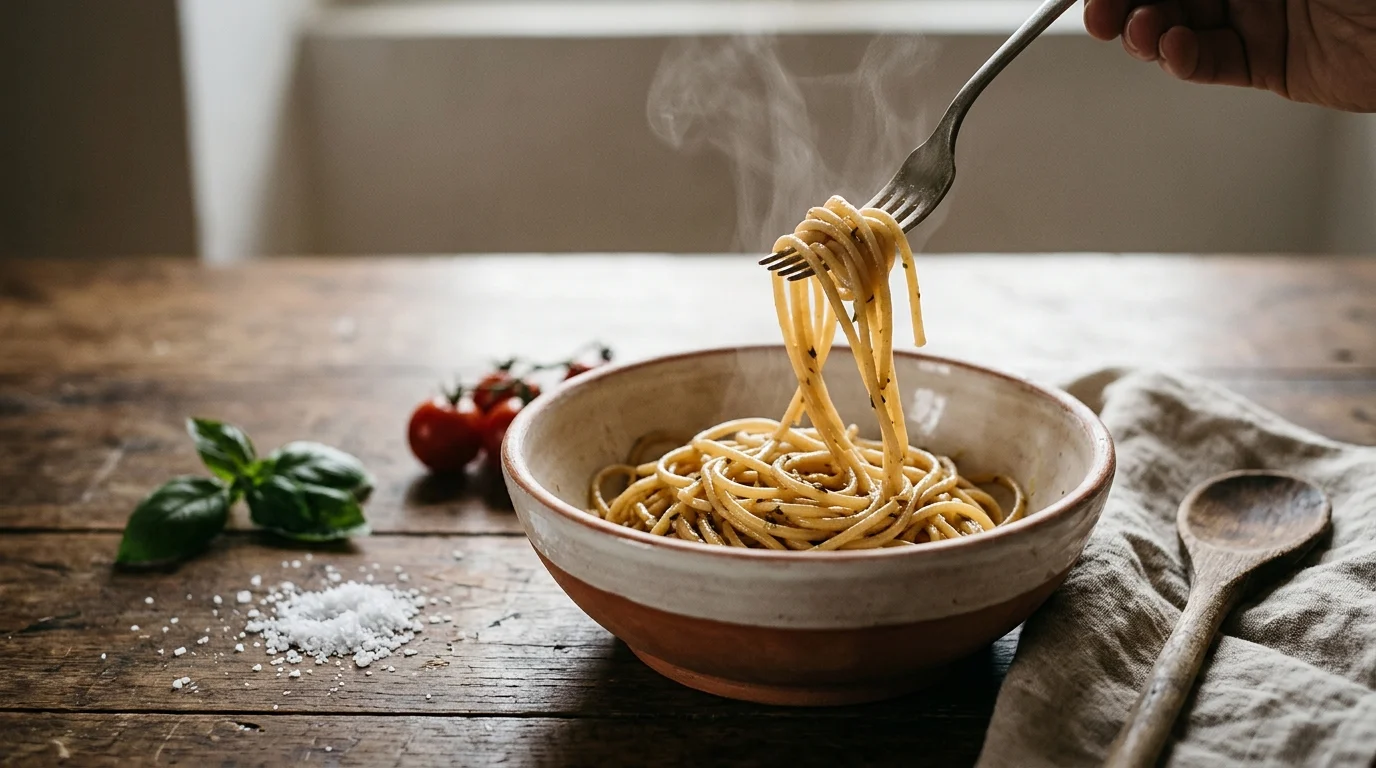
Quick Ans: “Al dente” is an Italian cooking term that means “to the tooth.” It describes pasta, rice, or vegetables cooked until they are tender but still firm, offering a slight resistance when bitten. Perfectly al dente food holds its shape, texture, and a bit of bite rather than turning soft or mushy.
If you have ever followed a pasta recipe that instructs you to cook the noodles “al dente,” you have encountered one of the most important texture rules in Italian cooking. This simple phrase transforms an ordinary pot of pasta into a dish with structure, character, and the ability to hold sauce properly. Ignoring it often leads to the familiar problem of limp, overcooked noodles that collapse on the plate.
Understanding al dente goes beyond learning a definition. It is about timing, sensory awareness, and respecting the ingredients you cook. Italian chefs treat this doneness level as non-negotiable, and home cooks can learn the same skill with a few practical habits. This guide explains exactly what al dente means, how to test for it, which foods it applies to, and why it matters for both flavor and digestion.
The Core Meaning of Al Dente
“Al dente” is an Italian phrase that translates literally as “to the tooth.” In cooking, it describes food that is cooked until tender but still offers a gentle resistance when you bite into it. The center of the food should be cooked through, not raw, but it should not be so soft that it loses all texture.
The term originated in Italian cuisine, where pasta is never served limp or fully softened. Instead, it is pulled from the water while it still has a slight firmness at its core. This bite is the hallmark of properly cooked pasta in Italy, and it is considered a sign of respect for the ingredient.
For pasta, al dente means the noodle bends without breaking but still has a subtle snap. And For rice, it means the grain is tender on the outside with a slight firmness in the middle. For vegetables, it means they are cooked through but retain a pleasant crunch rather than turning to mush.
Why Al Dente Matters in Cooking
Cooking food to the al dente stage is not just a culinary preference. It has practical consequences for texture, sauce absorption, and even digestion.
- Better texture and mouthfeel. Al dente pasta and vegetables feel satisfying to chew. They provide structure on the plate and contrast well with softer ingredients like sauces or melted cheese.
- Improved sauce absorption. Pasta cooked al dente has a rougher, more porous surface that grabs and holds sauce. Overcooked pasta becomes smooth and slick, causing sauce to slide off.
- Lower glycemic response. Slightly firmer pasta digests more slowly than mushy pasta, which can lead to a gentler rise in blood sugar. This is why many health conscious cooks favor al dente preparation.
- Preserved nutrients. Vegetables cooked to a firm bite retain more of their water soluble vitamins than those boiled until soft.
How to Test for Al Dente
Checking doneness is a skill that improves quickly with practice. Here are the reliable methods used by professional cooks.
The Bite Test
The most accurate way to check for al dente is simply to bite into the food. Take a piece out of the pot, let it cool for a moment, and bite it. You should feel a slight firmness in the center that gives way with a bit of pressure. If there is a visible white or uncooked ring in the middle of the pasta, it needs more time.
The Timing Method
Always start with the package instructions and subtract one to two minutes. Set a timer for that earlier point and begin testing. Package times are a guideline, not a guarantee, because stove heat, pot size, and pasta shape all affect cooking speed.
The Snap Test
For long pasta like spaghetti, lift a strand and bend it. Al dente pasta bends with resistance and may snap, while overcooked pasta folds limply. This is a fast visual check that requires no tasting.
Which Foods Are Cooked Al Dente
Al dente is most associated with pasta, but the technique applies to several categories of food.
| Food | What Al Dente Looks Like |
|---|---|
| Pasta | Tender outside, slight firmness in the center, holds its shape |
| Rice | Grains are separate, tender, with a slight bite at the core |
| Vegetables | Cooked through but still crisp, bright in color |
| Beans and legumes | Soft enough to eat, but not falling apart |
It is worth noting that some dishes genuinely require softer cooking. Baked pasta dishes, for example, often call for pasta slightly undercooked so it finishes cooking in the oven. Creamy risotto, on the other hand, is traditionally stirred to a flowing, softer texture rather than a firm bite.
Al Dente vs Overcooked: The Practical Difference
The gap between al dente and overcooked pasta is only a minute or two, which is why attention matters so much. Overcooked pasta absorbs a large amount of water, swells, and loses its structural integrity. It becomes sticky, pale, and difficult to toss with sauce.
Al dente pasta retains a smaller amount of absorbed water and a firmer structure. When it is drained and immediately combined with hot sauce, it finishes cooking in the pan, absorbing flavor rather than water. This final step, known in Italian kitchens as mantecatura, is where the dish comes together.
Tips for Achieving Perfect Al Dente Every Time
- Use plenty of water. A large pot with ample water keeps the temperature stable when pasta is added, which helps cooking stay even.
- Salt the water well. Seasoned water flavors the pasta from the inside out. Add salt after the water boils and before the pasta goes in.
- Stir during the first minute. This prevents strands and shapes from sticking together at the start of cooking.
- Start tasting early. Begin checking one to two minutes before the package time suggests. The window is narrow.
- Reserve pasta water. Before draining, save a cup of the starchy cooking water. It can loosen a sauce and help it cling.
- Do not rinse. Rinsing removes the surface starch that helps sauce adhere. Drain and toss immediately instead.
Frequently Asked Questions About Al Dente
What does al dente mean literally?
Al dente is Italian for “to the tooth.” The phrase describes food cooked so that it still offers a slight resistance when bitten, as though it is testing the tooth.
Is al dente pasta undercooked?
No. Al dente pasta is fully cooked, but it retains a firm center rather than turning soft. Undercooked pasta has a hard, crunchy, or raw tasting core, while al dente pasta is tender with a gentle bite.
How do I know when pasta is al dente?
The most reliable method is to bite into a piece. Al dente pasta is tender on the outside with slight firmness in the middle and no raw white ring. You can also test a strand by bending it to feel the resistance.
Does al dente apply to vegetables and rice?
Yes. The term applies to any food cooked to a firm but tender stage. Vegetables cooked al dente stay crisp and bright, and rice cooked al dente has separate grains with a slight bite at the center.
Is al dente pasta healthier?
Slightly firmer pasta digests more slowly than very soft pasta, which can produce a gentler blood sugar response. It also preserves more texture and helps you eat sauce in better proportion, though overall health depends on the whole meal.
Why does restaurant pasta taste better than homemade?
Restaurants often cook pasta to al dente and finish it in the sauce with a splash of starchy pasta water. This step, done quickly after draining, builds a glossy coating that home cooks can easily replicate.
Conclusion
So what does al dente mean in cooking? It means food cooked to the tooth, tender but still firm, with a gentle resistance that signals it has been treated with care. For pasta, rice, and vegetables, this doneness level protects texture, improves sauce absorption, and keeps the ingredient at its best. The skill is easy to learn: start tasting early, trust your bite over the clock, and finish the food in the pan with a little starchy water. Master this one habit, and your pasta dishes will taste noticeably better from the very first attempt.










1 thought on “What Does “Al Dente” Mean in Cooking? A Complete Guide to Perfect Pasta Texture 2026”