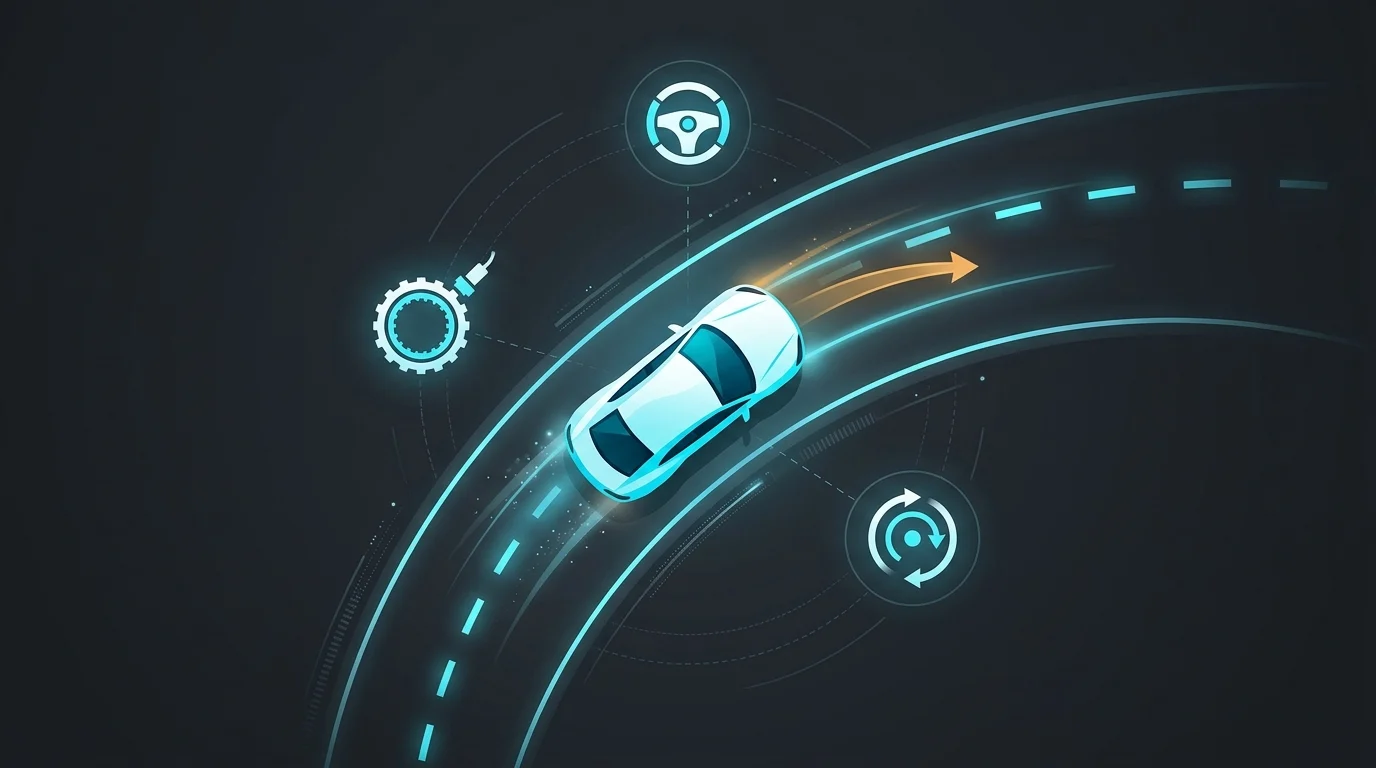
Quick Ans: In a car, ESP stands for Electronic Stability Program. It is a safety system that helps prevent skidding and loss of control by detecting when the car is not moving in the direction the driver intends, then automatically applying brakes to individual wheels and reducing engine power to bring the vehicle back on course . It is also widely known as ESC (Electronic Stability Control).
Modern cars are packed with electronic safety aids, and few are as important as ESP. Unlike seatbelts and airbags, which protect you during a crash, ESP works quietly in the background to help prevent the crash from happening in the first place. It steps in during emergency maneuvers, slippery roads, or sudden evasive actions, correcting the car’s path in fractions of a second .
The system goes by many names depending on the manufacturer. You may see it called ESC, VSC, DSC, or VSA, but the underlying technology is the same . This guide explains what ESP means, how it works, why it matters for safety, and what to do when the warning light appears on your dashboard.
The Core Definition of ESP
ESP is an electronic safety system designed to help the driver maintain control of the vehicle during dynamic driving situations. It continuously monitors the car’s behavior and compares the driver’s intended direction, based on steering input, with the vehicle’s actual movement. If the two do not match, the system intervenes to correct the discrepancy .
The technology was developed jointly by Mercedes-Benz and Bosch and first appeared in series production in 1995 in the Mercedes-Benz S 600 Coupé . Since November 2011, all new cars sold in the European Union have been required to have ESP fitted as standard .
How ESP Works
ESP builds on the hardware of two other systems: Anti-lock Braking System (ABS) and Traction Control System (TCS). It uses the same wheel speed sensors but adds more sophisticated sensors to monitor steering angle, lateral acceleration, and yaw rate, which is the car’s rotation around its vertical axis .
Here is how the process works in practice:
- Sensors monitor the car. Wheel speed sensors, steering angle sensors, and yaw rate sensors constantly feed data to the ESP control unit .
- The computer compares input and reality. It checks whether the car is actually going where the steering wheel is pointed. If the car is turning more than intended (oversteer) or less than intended (understeer), the system detects the problem .
- ESP intervenes. The system applies brake pressure to individual wheels, and in many cars also reduces engine power, to help the vehicle regain grip and follow the driver’s intended path .
Bosch, a leading manufacturer of ESP systems, estimates that up to 80 percent of skidding accidents can be prevented by ESP . UK research suggests the chance of being involved in a fatal crash is reduced by around 25 percent in cars equipped with the system .
ESP vs. Traction Control: What Is the Difference?
While ESP and traction control work together, they address different problems.
| System | Primary Function | When It Acts |
|---|---|---|
| Traction Control | Prevents wheelspin during acceleration | When you accelerate and the driven wheels lose grip |
| ESP / ESC | Prevents skidding and loss of directional control | When the car begins to slide sideways or deviates from your steering input |
Traction control focuses on longitudinal grip, keeping the wheels from spinning uselessly. ESP adds a lateral dimension, correcting sideways motion that could lead to a spin or a slide off the road . In most modern cars, traction control is integrated into the ESP system, but the two functions remain distinct.
The Many Names for ESP
Car manufacturers use different acronyms for the same technology. If your car does not list “ESP,” it may still have an equivalent system under another name :
- ESC: Electronic Stability Control (the most common alternative)
- VSC: Vehicle Stability Control (Toyota)
- VSA: Vehicle Stability Assist (Honda)
- DSC: Dynamic Stability Control (BMW, Mazda)
- PSM: Porsche Stability Management
- DSTC: Dynamic Stability and Traction Control (Volvo)
All of these systems perform the same basic function: helping you stay in control when traction is lost.
What to Do When the ESP Warning Light Comes On
The ESP warning light on your dashboard behaves differently depending on the situation.
If the light flickers briefly while driving: This is normal. It means the system is actively working to correct a loss of traction, often because of slippery roads or aggressive driving. The light should go off once the car is stable again .
If the light stays on continuously: This usually indicates a fault with the system. Try pressing the ESP button (if your car has one) to see if it re-engages. If the light remains on, have the system checked by a qualified mechanic. Do not ignore a persistent ESP warning light, as it may indicate a problem that affects your car’s stability in an emergency .
If you have intentionally turned ESP off: Some cars allow you to disable the system, often for track driving or when stuck in snow. In this case, the light will stay on to remind you that the system is inactive. It is generally recommended to leave ESP on for normal road driving .
Frequently Asked Questions About ESP in Cars
What does ESP stand for in a car?
ESP stands for Electronic Stability Program. It is a safety system that helps prevent skidding and loss of control by automatically braking individual wheels and reducing engine power when the car deviates from the driver’s intended path .
Is ESP the same as ESC?
Yes, in practice. ESP and ESC (Electronic Stability Control) refer to the same type of system. Different manufacturers use different names, but the function is the same: to help maintain vehicle stability and prevent skids .
How do I know if my car has ESP?
Since 2014, all new cars sold in Europe have been required to have ESP as standard. If your car was built after that date, it almost certainly has it. You can also check your owner’s manual or look for an “ESP” or “ESC” button on the dashboard, often near the steering column or center console .
Can I drive with the ESP light on?
If the light is flickering, the system is working normally. If it stays on continuously, there may be a fault. You can still drive, but the stability system may not function in an emergency. Have it checked by a mechanic as soon as possible .
Does ESP replace the need for safe driving?
No. ESP is an assistance system, not a substitute for attentive driving. It cannot overcome the laws of physics, and it cannot prevent all accidents. It is designed to help in critical situations, but drivers should always adjust their speed and behavior to the conditions of the road .
Conclusion
To answer the question of what ESP means in a car: it is the Electronic Stability Program, a life-saving safety system that helps keep your vehicle on the road when traction is lost or when you need to make an emergency maneuver. It works silently, monitoring your car’s movement and intervening with precise braking and power adjustments when you need it most. Whether your car calls it ESP, ESC, VSC, or DSC, the technology is one of the most important safety advances in modern automotive history. Pay attention to the warning light, keep the system on during normal driving, and remember that ESP assists your driving but does not replace it. Safe driving habits and a functioning stability system together give you the best chance of staying in control.










2 thoughts on “What Does ESP Mean in a Car? A Clear Guide to Electronic Stability Program 2026”