Quick Ans: ISS in school stands for In-School Suspension. It is a disciplinary action where a student is removed from regular classroom activities but remains at school under supervision. Students assigned ISS usually complete schoolwork in a separate room while following strict behavioral rules.
If you’ve heard a teacher, student, or school administrator mention ISS, you may be wondering what it means. Unlike internet slang or text abbreviations, ISS is a common educational acronym used in elementary schools, middle schools, and high schools throughout the United States.
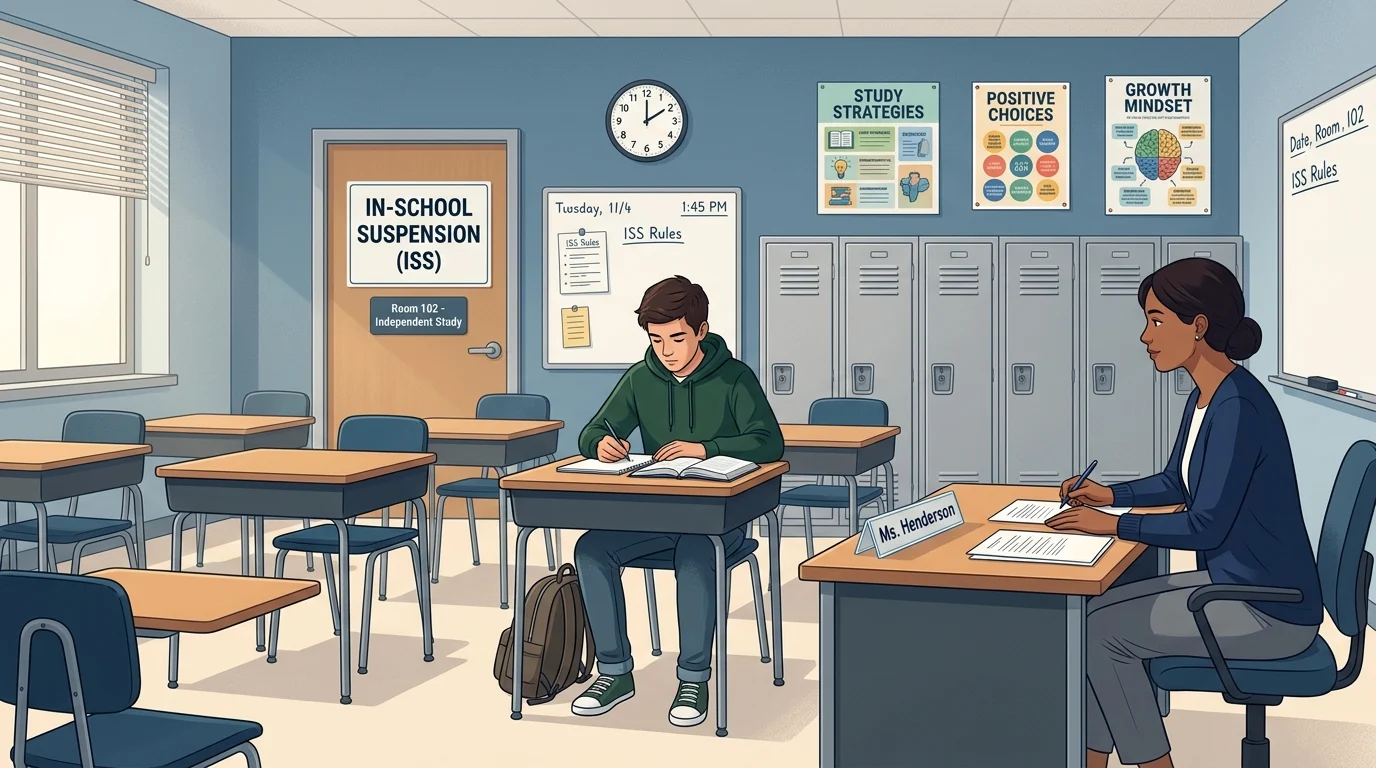
Receiving ISS (In-School Suspension) is a disciplinary consequence designed to address inappropriate behavior without sending a student home. Instead of attending their normal classes, students spend the school day in a supervised classroom where they complete assignments independently and are expected to follow strict rules.
Every school has its own policies regarding ISS, but the overall goal is usually the same: to encourage students to reflect on their behavior, stay caught up with schoolwork, and avoid future disciplinary issues.
This guide explains everything you need to know about what ISS means in school, including how it works, common reasons students receive ISS, school rules, what to expect, differences between ISS and OSS, conversation examples, frequently asked questions, and helpful tips.
Quick Answer Box
| Topic | Answer |
|---|---|
| Meaning | In-School Suspension |
| Used In | Elementary, Middle, and High Schools |
| Purpose | Student discipline while remaining on campus |
| Student Attends School? | Yes |
| Classroom Attendance | No, student stays in a supervised ISS room |
| Typical Activities | Independent classwork, reading, quiet study, reflection |
What Does ISS Mean in School?
ISS stands for In-School Suspension.
It is a disciplinary action that removes a student from their regular classroom schedule while keeping them on school property.
Instead of attending classes with other students, the student reports to a designated ISS classroom where they remain supervised throughout the school day.
Although ISS is considered a punishment, it also allows students to continue completing academic work without missing as much instruction as they would during an out-of-school suspension.
Full Definition
In-School Suspension is a structured disciplinary program used by many schools to address student misconduct.
Students assigned ISS generally:
- Report to a designated room.
- Complete class assignments independently.
- Have limited interaction with other students.
- Follow strict behavioral expectations.
- Remain supervised by school staff throughout the day.
The exact procedures vary between school districts, but the objective is usually to correct behavior while minimizing academic disruption.
Why Do Schools Use ISS?
Schools use ISS because it balances discipline with continued learning.
Common goals include:
- Correcting inappropriate behavior.
- Maintaining a safe learning environment.
- Keeping students academically engaged.
- Reducing classroom disruptions.
- Encouraging personal responsibility.
- Providing time for reflection.
Many educators believe ISS is more productive than sending students home because students continue working on school assignments.
Common Reasons Students Receive ISS
Every school has different disciplinary policies, but students may receive ISS for behaviors such as:
Classroom Disruption
Repeatedly interrupting lessons, refusing to follow classroom rules, or distracting other students.
Excessive Tardiness
Frequently arriving late to school or class without a valid excuse.
Dress Code Violations
Repeated violations of school dress code after previous warnings.
Disrespect Toward Staff
Using inappropriate language or refusing to follow reasonable instructions from teachers or administrators.
Minor Physical Altercations
Some schools assign ISS for minor incidents that do not require out-of-school suspension.
Academic Misconduct
Cheating on assignments or exams may result in ISS depending on school policy.
Repeated Rule Violations
Ignoring school expectations after multiple warnings.
What Happens During ISS?
Although procedures vary, a typical ISS day includes:
Morning Check-In
Students report directly to the ISS classroom instead of their regular classes.
Independent Schoolwork
Teachers send assignments for students to complete during the day.
Limited Communication
Talking is usually restricted unless permission is given.
Lunch Procedures
Students may eat lunch separately from the general student population.
Breaks
Students may receive scheduled restroom breaks under staff supervision.
End-of-Day Dismissal
Students leave after completing their assigned ISS period and following school procedures.
Rules Students Must Follow During ISS
Most schools require students to:
- Arrive on time.
- Remain seated.
- Complete all assigned work.
- Respect supervising staff.
- Avoid talking without permission.
- Keep electronic devices put away unless authorized.
- Follow all school policies.
Failure to follow ISS rules may lead to additional disciplinary action.
ISS vs. OSS: What’s the Difference?
Many people confuse ISS with OSS.
ISS (In-School Suspension)
- Student remains at school.
- Continues completing assignments.
- Supervised throughout the day.
- Limited interaction with classmates.
OSS (Out-of-School Suspension)
- Student stays home.
- Misses classroom instruction.
- May receive makeup work.
- Cannot participate in school activities during the suspension.
ISS is generally viewed as a less severe disciplinary measure than OSS.
Real-Life Examples
Conversation Example 1
Student: Why wasn’t Jake in math class?
Teacher: He has ISS today.
Conversation Example 2
Parent: Why did my daughter receive ISS?
Principal: She repeatedly violated the classroom behavior policy.
Conversation Example 3
Student: Do I still have homework during ISS?
Teacher: Yes, your teachers will send assignments.
Conversation Example 4
Student: Can I talk to my friends during ISS?
Supervisor: No. Please remain quiet and complete your work.
Conversation Example 5
Parent: How long will ISS last?
Administrator: One school day unless additional discipline becomes necessary.
Benefits of In-School Suspension
Although students generally prefer to avoid ISS, schools use it for several educational reasons.
Potential benefits include:
- Encourages accountability.
- Reduces classroom distractions.
- Keeps students engaged academically.
- Allows time for behavior reflection.
- Provides structured supervision.
- Supports a safer learning environment.
Challenges of ISS
ISS may also present challenges.
Some students may:
- Feel isolated.
- Miss classroom discussions.
- Lose opportunities for group activities.
- Experience embarrassment among peers.
- Need additional support to improve behavior.
Because of these challenges, many schools combine ISS with counseling or behavior improvement plans.
Tips for Students Assigned ISS
If you receive ISS:
- Follow staff instructions carefully.
- Complete all assignments.
- Stay respectful.
- Avoid arguing.
- Use the experience as an opportunity to improve.
- Return to class with a positive attitude.
Taking responsibility for your actions often helps rebuild trust with teachers and school administrators.
Frequently Asked Questions
What does ISS stand for in school?
ISS stands for In-School Suspension.
Is ISS the same as detention?
No. Detention usually lasts before or after school, while ISS typically lasts for one or more full school days.
Do students still attend school during ISS?
Yes. Students remain on campus under supervision.
Can students complete homework during ISS?
Yes. Most schools provide assignments from classroom teachers.
Does ISS go on a permanent record?
Policies vary by school district, but disciplinary records are usually maintained according to local school guidelines.
Can parents visit students during ISS?
School policies differ, so parents should contact the school administration.
Can students use phones during ISS?
Most schools prohibit personal electronic devices unless permission is granted.
How long does ISS usually last?
Depending on the incident, ISS may last one day or several days.
Is ISS better than OSS?
Many educators believe ISS helps students continue learning while addressing behavioral issues.
How can students avoid ISS?
Following school rules, respecting teachers, completing assignments, and making positive choices greatly reduce the likelihood of receiving ISS.
Conclusion
When someone asks, “What does ISS mean in school?”, the answer is straightforward: ISS stands for In-School Suspension. It is a disciplinary measure that keeps students on campus while temporarily removing them from their regular classrooms.
Instead of staying home, students assigned ISS complete schoolwork in a supervised environment with limited distractions and strict behavioral expectations. Although receiving ISS is never an ideal situation, many schools use it to encourage accountability while helping students stay on track academically.
Understanding how ISS works, why schools use it, and what students can expect helps reduce confusion for students, parents, and educators alike. By following school rules and making responsible choices, students can avoid disciplinary consequences and enjoy a more successful educational experience.
Discover More:-
- GFYS Meaning in Text: What It Means, When It’s Used & How to Respond 2026
- FRM Meaning in Text: What It Means, How to Use It, Examples 2026

Alexander Cole is a professional content writer and researcher who specializes in creating informative, reader-friendly, and well-researched articles. He is committed to publishing accurate, valuable, and engaging content that helps readers stay informed and make smarter decisions.