Quick Ans: Cachexia is a serious medical condition characterized by extreme weight loss, muscle wasting, and weakness that cannot be fully reversed by simply eating more. It commonly occurs in people with chronic illnesses such as cancer, heart failure, chronic kidney disease, COPD, and advanced infections. Early diagnosis and treatment focus on managing the underlying disease, improving nutrition, and maintaining muscle strength.
If you’ve recently heard the term cachexia, you may be wondering what it means and why healthcare professionals consider it such a significant medical condition. Unlike ordinary weight loss caused by dieting or temporary illness, cachexia is a complex syndrome that affects how the body uses nutrients and maintains muscle mass.
People with cachexia often lose weight rapidly, especially lean muscle, even when they are trying to eat enough food. This condition can reduce strength, decrease quality of life, make daily activities more difficult, and complicate treatment for the underlying disease.
In this guide, you’ll learn everything you need to know about the meaning of cachexia, including its definition, symptoms, causes, risk factors, diagnosis, stages, treatment options, complications, prevention strategies, frequently asked questions, and when to seek medical care.
Quick Answer Box
| Topic | Answer |
|---|---|
| Medical Term | Cachexia |
| Pronunciation | kuh-KEK-see-uh |
| Meaning | A syndrome causing severe muscle and weight loss due to chronic disease |
| Common Causes | Cancer, heart failure, COPD, kidney disease, HIV/AIDS and other chronic illnesses |
| Main Symptoms | Weight loss, muscle wasting, fatigue, weakness, poor appetite |
| Treatment | Treat the underlying disease, nutrition support, exercise when appropriate, symptom management |
| Can Eating Alone Cure It? | No, not in most cases |
What Does Cachexia Mean?
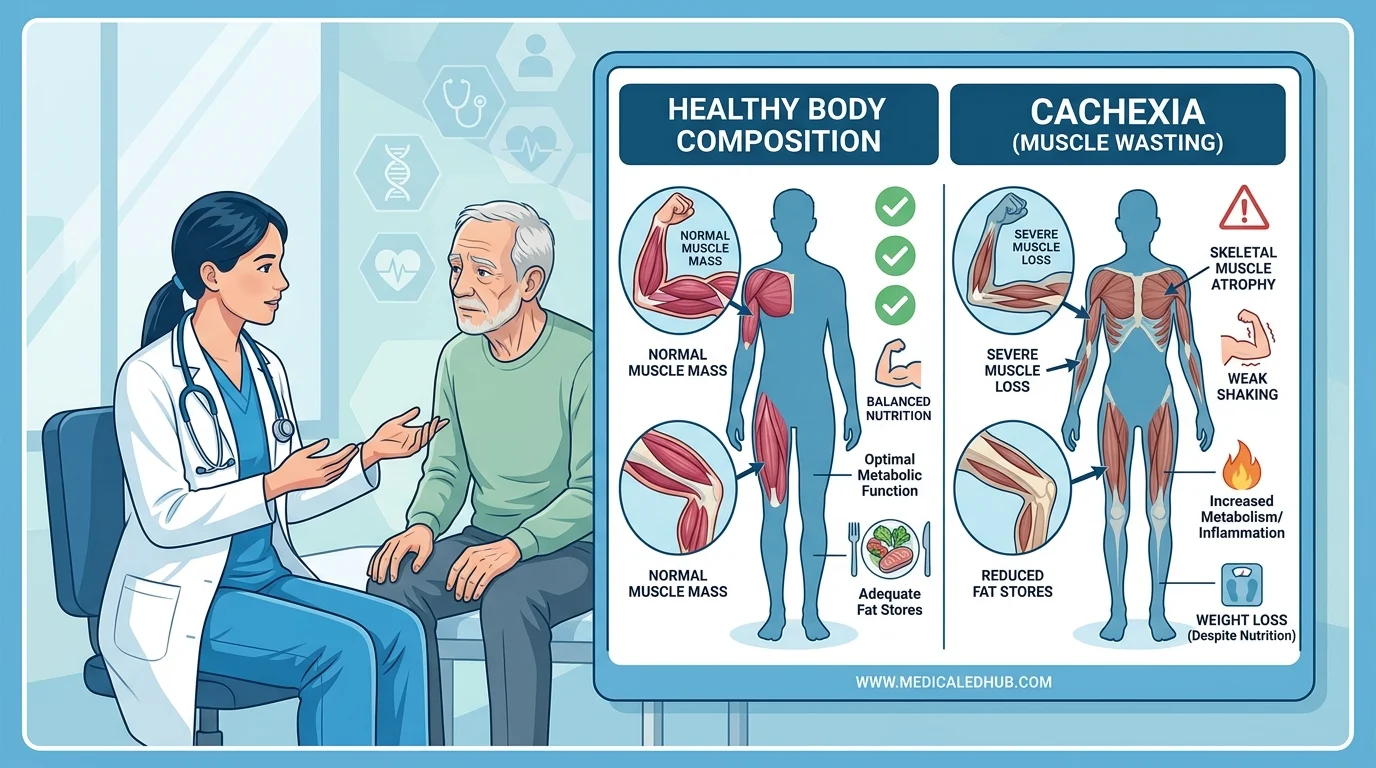
Cachexia is a medical syndrome involving unintentional weight loss, progressive muscle wasting, weakness, fatigue, and loss of appetite. It develops because chronic diseases trigger changes in metabolism and inflammation that cause the body to break down muscle and fat faster than they can be replaced.
Unlike simple starvation, cachexia is not caused solely by inadequate food intake. Even if a person increases their calorie consumption, the body may continue losing muscle due to changes in hormones, inflammatory chemicals, and metabolism.
Healthcare providers consider cachexia one of the most serious complications of many chronic illnesses because it affects physical function, recovery, and overall survival.
Full Definition
Cachexia is defined as a multifactorial metabolic syndrome associated with chronic disease and characterized primarily by ongoing muscle loss with or without fat loss.
Several biological processes contribute to cachexia, including:
- Increased inflammation
- Abnormal protein breakdown
- Reduced muscle building
- Hormonal changes
- Increased energy expenditure
- Reduced appetite
- Poor nutrient absorption in some conditions
These changes make cachexia very different from ordinary weight loss or malnutrition.
Common Symptoms of Cachexia
Symptoms often develop gradually and worsen as the underlying disease progresses.
Muscle Wasting
One of the earliest and most noticeable signs is loss of muscle mass, particularly in the arms, legs, shoulders, and chest.
Unintentional Weight Loss
Many patients lose more than 5% of their body weight over several months without trying.
Weakness
As muscle mass decreases, everyday tasks such as walking, climbing stairs, or lifting objects become more difficult.
Fatigue
Persistent tiredness is common even after adequate rest.
Poor Appetite
Many people experience reduced hunger, early fullness, or changes in taste.
Reduced Physical Activity
Patients often become less active because weakness and fatigue limit mobility.
Difficulty Recovering
Recovery after illness, surgery, or medical treatments may take longer than expected.
What Causes Cachexia?
Cachexia develops as a result of chronic illnesses rather than from poor eating habits alone.
Cancer
Cancer is the leading cause of cachexia. Many advanced cancers produce inflammatory substances that accelerate muscle breakdown.
Chronic Heart Failure
Heart failure can increase metabolic demands while reducing appetite and physical activity.
Chronic Obstructive Pulmonary Disease (COPD)
People with COPD often expend more energy breathing while consuming fewer calories.
Chronic Kidney Disease
Kidney disease affects metabolism, hormone balance, and appetite, increasing the risk of muscle loss.
HIV/AIDS
Advanced HIV infection may cause severe weight and muscle loss despite nutritional support.
Neurological Diseases
Conditions such as ALS and advanced Parkinson’s disease may contribute to cachexia through multiple mechanisms.
Other Chronic Illnesses
Additional causes include:
- Liver disease
- Rheumatoid arthritis
- Tuberculosis
- Advanced infections
- Inflammatory bowel disease
How Cachexia Differs from Normal Weight Loss
Although both involve losing weight, cachexia and ordinary weight loss are not the same.
Normal Weight Loss
- Often intentional
- Usually caused by dieting or exercise
- Muscle loss is limited when nutrition is adequate
- Weight can usually be regained
Cachexia
- Unintentional
- Caused by chronic disease
- Significant muscle wasting
- Difficult to reverse with food alone
- Requires medical treatment
This distinction is important because cachexia needs a comprehensive treatment approach rather than simply increasing calorie intake.
Risk Factors
Several factors increase the likelihood of developing cachexia.
These include:
- Advanced cancer
- Long-term inflammatory diseases
- Severe heart failure
- Chronic lung disease
- Kidney failure
- Older age
- Reduced mobility
- Ongoing infections
- Poor appetite
How Doctors Diagnose Cachexia
Diagnosis involves evaluating both physical symptoms and the underlying disease.
Doctors may assess:
- Body weight changes
- Body mass index (BMI)
- Muscle strength
- Muscle mass
- Appetite
- Blood tests
- Inflammatory markers
- Medical history
- Imaging studies when necessary
Early diagnosis allows treatment to begin before severe muscle loss occurs.
Stages of Cachexia
Healthcare professionals sometimes describe cachexia in stages.
Pre-Cachexia
- Mild weight loss
- Reduced appetite
- Early metabolic changes
Cachexia
- Ongoing muscle loss
- Noticeable weakness
- Significant weight reduction
- Reduced physical function
Refractory Cachexia
This advanced stage occurs when the underlying disease no longer responds well to treatment and life expectancy is limited. Care often focuses on comfort, nutrition, and quality of life.
Treatment Options
Treatment aims to slow muscle loss, improve quality of life, and manage the underlying disease.
Treat the Underlying Condition
Managing cancer, heart failure, COPD, or other illnesses is the most important step.
Nutritional Support
Dietitians may recommend:
- High-protein foods
- High-calorie meals
- Small frequent meals
- Nutritional supplements
- Protein shakes
Exercise
Light resistance and strength exercises may help preserve muscle when medically appropriate.
Medications
Doctors may prescribe medications to:
- Improve appetite
- Reduce inflammation
- Treat nausea
- Manage pain
- Control symptoms affecting nutrition
Medication choices vary depending on the underlying condition and individual needs.
Lifestyle Tips
People living with cachexia may benefit from:
- Eating small meals throughout the day
- Prioritizing protein-rich foods
- Staying hydrated
- Working with a registered dietitian
- Remaining physically active when possible
- Following medical treatment plans
- Monitoring weight regularly
Possible Complications
Untreated cachexia may lead to:
- Severe muscle weakness
- Increased risk of falls
- Reduced ability to perform daily activities
- Poor treatment tolerance
- Slower recovery
- Lower quality of life
- Increased risk of hospitalization
Can Cachexia Be Prevented?
Complete prevention is not always possible because it depends on the underlying disease.
However, early intervention may reduce severity.
Helpful strategies include:
- Early medical evaluation
- Nutritional counselling
- Managing chronic illnesses
- Regular exercise when appropriate
- Monitoring weight changes
- Addressing appetite problems promptly
When to See a Doctor
Seek medical advice if you or someone you know experiences:
- Unexplained weight loss
- Progressive muscle weakness
- Persistent fatigue
- Poor appetite lasting several weeks
- Difficulty performing everyday activities
- Rapid decline during treatment for a chronic illness
Early diagnosis often improves treatment planning and symptom management.
Frequently Asked Questions
What does cachexia mean?
Cachexia is a medical syndrome involving severe muscle wasting, weight loss, and weakness caused by chronic disease.
Is cachexia the same as malnutrition?
No. Although malnutrition can contribute, cachexia involves complex metabolic and inflammatory changes that make it different.
Can eating more cure cachexia?
Usually not. Increasing food intake alone rarely reverses cachexia without treating the underlying illness.
Which diseases commonly cause cachexia?
Cancer, heart failure, COPD, chronic kidney disease, HIV/AIDS, and several inflammatory diseases are among the most common causes.
Is cachexia reversible?
In some cases, early treatment of the underlying condition combined with nutrition and physical therapy can improve symptoms. However, advanced cachexia is often difficult to reverse completely.
Does cachexia only affect people with cancer?
No. Although cancer-related cachexia is common, many other chronic illnesses can also cause it.
Why is muscle loss so significant?
Loss of muscle reduces strength, mobility, independence, and the body’s ability to recover from illness.
How is cachexia diagnosed?
Doctors diagnose cachexia using weight history, muscle measurements, symptoms, physical examination, blood tests, and evaluation of the underlying disease.
Can exercise help?
When recommended by a healthcare professional, gentle resistance and strength training may help preserve muscle mass.
Is cachexia life-threatening?
Cachexia itself can significantly affect health and often reflects advanced chronic disease. Prognosis depends largely on the underlying condition and how well it responds to treatment.
Conclusion
Cachexia is far more than ordinary weight loss. It is a complex medical syndrome marked by progressive muscle wasting, weakness, fatigue, and metabolic changes that occur alongside serious chronic illnesses. Because eating more alone cannot usually reverse the condition, effective treatment focuses on managing the underlying disease while supporting nutrition, preserving muscle, and improving quality of life.
Recognizing the early signs of cachexia is essential. Unexplained weight loss, declining strength, reduced appetite, and persistent fatigue should always be discussed with a healthcare professional, especially in people living with chronic illnesses. Early intervention offers the best opportunity to slow progression, improve daily functioning, and support overall well-being.

Amelia Brooks is a professional content writer and digital publishing specialist with a passion for creating clear, engaging, and informative content. She has extensive experience writing about technology, business, lifestyle, and online services.