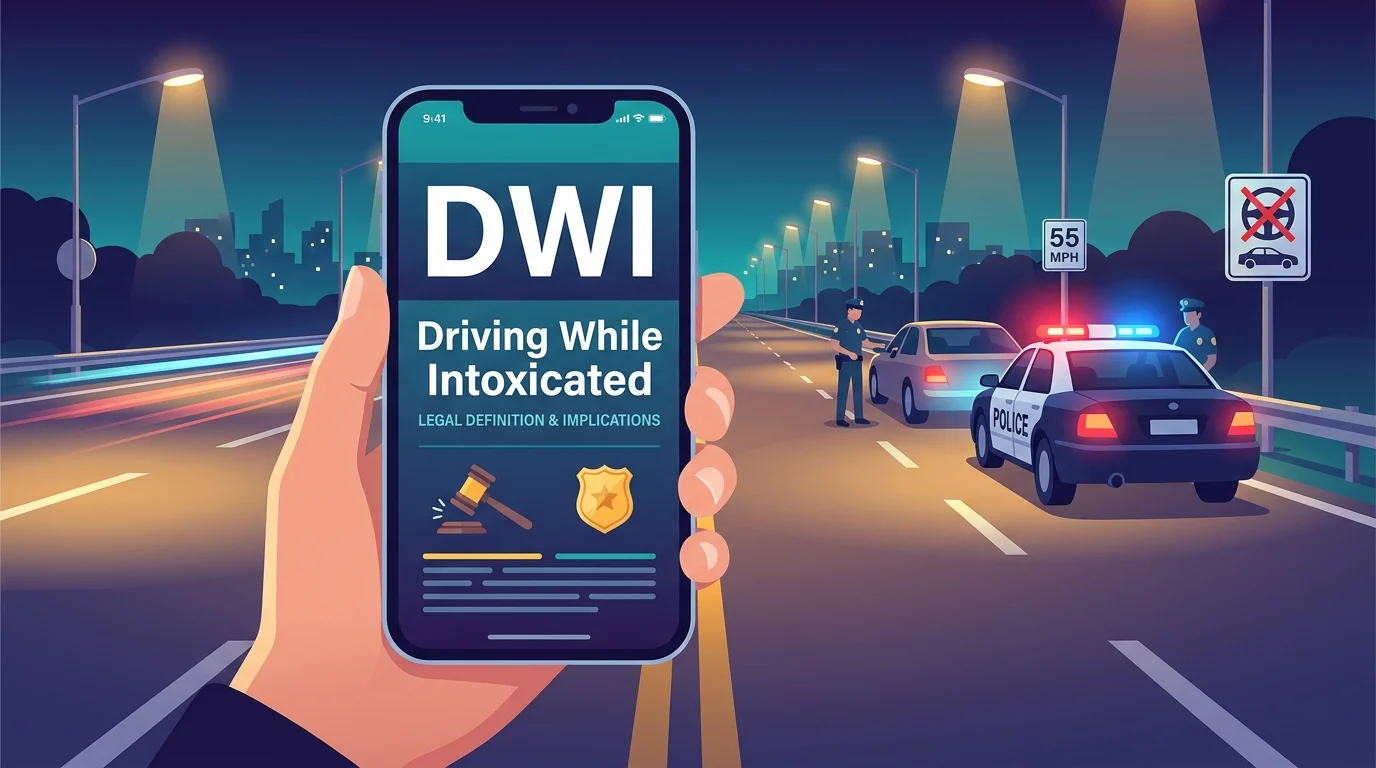
Quick Ans: DWI most commonly stands for “Driving While Intoxicated” or “Driving While Impaired.” It refers to the criminal offense of operating a vehicle while under the influence of alcohol or drugs. In casual conversations and online discussions, DWI almost always relates to impaired driving, although it can have different meanings in specialized industries.
If you’ve seen DWI in a news article, text message, legal discussion, or social media post, you may be wondering what it means. Unlike many internet abbreviations, DWI is primarily a legal term rather than texting slang.
In the United States, DWI is commonly associated with impaired driving laws. However, its exact legal definition varies by state. Some states use DWI, others use DUI (Driving Under the Influence), while a few recognize both terms with different legal meanings.
Besides its legal use, DWI may occasionally represent other phrases in healthcare, engineering, or research. This guide explains the most common meaning of DWI, how it’s used in conversations, alternative definitions, examples, frequently asked questions, and practical tips for understanding the abbreviation in context.
Quick Answer Box
| Topic | Answer |
|---|---|
| Most Common Meaning | Driving While Intoxicated |
| Category | Legal abbreviation |
| Common Context | Traffic laws, police reports, news, court cases |
| Tone | Serious |
| Alternative Meanings | Driving While Impaired, Diffusion Weighted Imaging, Data Warehouse Interface and more |
| Example | “He was arrested for DWI last night.” |
What Does DWI Mean?
The abbreviation DWI most commonly stands for:
Driving While Intoxicated
or
Driving While Impaired
Both phrases describe operating a motor vehicle while alcohol, drugs, or another impairing substance affects a person’s ability to drive safely.
Although many people use DWI and DUI interchangeably, they are not always legally identical. The exact meaning depends on state law.
Full Definition
A DWI charge generally means a driver was allegedly operating a vehicle while impaired by alcohol, illegal drugs, prescription medication, or another intoxicating substance.
Law enforcement officers may determine impairment through:
- Field sobriety tests
- Breath alcohol tests
- Blood tests
- Urine tests
- Officer observations
- Chemical testing
The legal blood alcohol concentration (BAC) limit for adult drivers in most U.S. states is 0.08%, although stricter limits often apply to commercial drivers and drivers under the legal drinking age.
Context and Usage
Understanding the context helps determine exactly what DWI refers to.
Legal Conversations
Example:
“He was charged with DWI after failing a breath test.”
Meaning:
The individual faces an impaired driving charge.
News Reports
Local news often reports:
“Police arrested a driver on suspicion of DWI.”
This indicates an alleged impaired driving offense.
Everyday Conversation
Friends may say:
“I’ll call a rideshare instead. I don’t want to risk a DWI.”
Here, DWI refers to avoiding impaired driving and its legal consequences.
Educational Campaigns
Road safety campaigns frequently mention DWI to encourage responsible driving and reduce alcohol-related crashes.
Real-Life Conversation Examples
Conversation Example 1
Alex: Are you okay to drive?
Ryan: No, I’ve had a few drinks.
Alex: Let’s call a ride. It’s not worth risking a DWI.
Conversation Example 2
Emma: Why was traffic stopped?
Sophia: Police arrested someone for suspected DWI.
Conversation Example 3
Jake: Did you hear about Tom?
Lucas: Yeah, he got a DWI last weekend.
Jake: Hopefully he learns from it.
Conversation Example 4
Sarah: Are they running checkpoints tonight?
Olivia: Yes, they’re looking for impaired drivers and checking for DWI violations.
Conversation Example 5
Noah: I’ll stay over tonight.
Ethan: Good idea. Driving after drinking isn’t worth the risk of a DWI.
Platform-Specific Meaning
Text Messages
People usually use DWI when discussing legal issues, news, or safe driving.
Example:
“Don’t drive after drinking. A DWI can change your life.”
Users may share news stories or awareness campaigns related to DWI prevention.
X (Twitter)
News organizations frequently post updates about DWI arrests, law enforcement initiatives, and public safety announcements.
Many discussions involve personal experiences, legal questions, or advice related to DWI cases and traffic laws.
News Websites
DWI appears regularly in headlines covering traffic incidents, police reports, and court proceedings.
Alternative Meanings of DWI
Although the legal definition is the most common, DWI has other meanings depending on the field.
Diffusion Weighted Imaging
In medicine, Diffusion Weighted Imaging (DWI) is a specialized MRI technique used to help diagnose conditions such as stroke, brain injury, infections, and certain tumors.
Example:
“The doctor ordered a DWI MRI scan.”
Data Warehouse Interface
Some information technology professionals use DWI when discussing database integration and data systems.
Digital Watermark Identifier
In digital media, DWI may occasionally refer to watermarking technologies or identification systems.
Domain-Specific Uses
Some businesses, universities, and organizations may use DWI as an internal abbreviation with a unique meaning.
DWI vs. DUI
People often confuse DWI and DUI because both relate to impaired driving.
DWI
- Often means Driving While Intoxicated or Driving While Impaired.
- Used in many U.S. states.
- Legal definition varies by jurisdiction.
DUI
- Means Driving Under the Influence.
- Used in many states instead of DWI.
- Some states distinguish DUI from DWI based on the driver’s level of impairment or age.
Because state laws differ, it’s important to understand the legal terminology where the incident occurs.
Related Terms
When researching DWI, you may also encounter:
- DUI (Driving Under the Influence)
- BAC (Blood Alcohol Concentration)
- Sobriety Test
- Breathalyzer
- Field Sobriety Test
- License Suspension
- Ignition Interlock Device
- Traffic Citation
- Reckless Driving
- Impaired Driving
These terms frequently appear together in discussions about road safety and traffic law.
How to Respond When Someone Mentions DWI
If someone says:
“I got a DWI.”
A respectful response might be:
- “I’m sorry to hear that.”
- “I hope everything works out.”
- “Take care and learn from the experience.”
- “I’m glad no one was hurt.”
If someone says:
“I’m thinking about driving after drinking.”
A responsible reply is:
- “Please don’t. Let’s find another ride.”
- “Call a taxi or rideshare.”
- “I’ll drive you home.”
- “Stay here until you’re sober.”
Common Misinterpretations
Some people assume DWI always means the same thing everywhere.
However:
- State laws differ.
- Medical professionals may mean Diffusion Weighted Imaging.
- Technology professionals may use DWI differently.
Reading the surrounding context helps identify the correct meaning.
When Not to Use DWI Incorrectly
Avoid assuming DWI means DUI in every legal situation because terminology varies by state.
Likewise, don’t use DWI jokingly when discussing impaired driving, as it relates to serious legal and public safety issues.
If you’re writing professional or legal content, use the term that accurately reflects the applicable jurisdiction.
Usage Tips
To understand DWI correctly:
- Consider the conversation topic.
- Check whether it’s a legal, medical, or technical discussion.
- Avoid guessing if the context isn’t clear.
- Remember that legal definitions vary across states.
- Use the full phrase when writing formal documents for clarity.
Frequently Asked Questions
What does DWI stand for?
It usually stands for Driving While Intoxicated or Driving While Impaired.
Is DWI the same as DUI?
Not always. Some states use the terms interchangeably, while others assign different legal meanings.
Is DWI a texting abbreviation?
Not typically. It’s primarily a legal abbreviation, though people use it in text messages when discussing driving or legal matters.
Can DWI refer to medical imaging?
Yes. In healthcare, DWI often means Diffusion Weighted Imaging, an MRI technique.
Is DWI a criminal offense?
In many jurisdictions, a DWI charge is a criminal matter, although laws and penalties vary by state.
What is the difference between DWI and reckless driving?
DWI involves impairment from alcohol or drugs, while reckless driving generally refers to dangerous driving behavior regardless of impairment.
Can prescription medication lead to a DWI?
Yes. If medication impairs a person’s ability to drive safely, it may contribute to a DWI charge depending on local laws.
Why do some states use DUI instead of DWI?
Each state establishes its own traffic laws and legal terminology.
Is DWI used outside the United States?
Some countries use different legal terms for impaired driving, so DWI is primarily associated with U.S. law.
How can I avoid a DWI?
Never drive while impaired. Arrange a designated driver, use a rideshare service, take public transportation, or wait until you are no longer impaired before driving.
Conclusion
The DWI meaning most commonly refers to Driving While Intoxicated or Driving While Impaired, a legal term used to describe operating a vehicle while affected by alcohol or drugs. It is widely used in police reports, court proceedings, public safety campaigns, news articles, and everyday conversations about responsible driving.
Although DWI can also stand for Diffusion Weighted Imaging in medicine or other specialized terms in technology and business, the surrounding context usually makes the intended meaning clear.
Understanding what DWI means—and how it differs from related terms such as DUI—can help you interpret conversations, news reports, and legal discussions more accurately while promoting safer and more informed driving decisions.
Discover More:-

Amelia Brooks is a professional content writer and digital publishing specialist with a passion for creating clear, engaging, and informative content. She has extensive experience writing about technology, business, lifestyle, and online services.