Quick Ans: “Okay” in text generally means agreement, acknowledgment, understanding, or acceptance. However, its tone can change depending on the conversation. It can sound friendly, neutral, enthusiastic, reluctant, or even passive-aggressive based on punctuation, capitalization, and context.
“Okay” is one of the most common words used in text messages, social media chats, and online conversations. Although it looks simple, its meaning isn’t always the same. A quick “okay” can express agreement, while “Okay…” or “OK.” may suggest hesitation, disappointment, or frustration.
Because text messages lack facial expressions and voice tone, the way someone types okay often affects how it’s interpreted. The number of letters, punctuation marks, emojis, and surrounding messages all contribute to its meaning.
In this guide, you’ll learn everything about the okay meaning in text, including its different interpretations, common uses, platform-specific examples, conversation scenarios, reply ideas, alternative expressions, common misunderstandings, and frequently asked questions.
Quick Answer Box
| Topic | Answer |
|---|---|
| Most Common Meaning | Agreement or acknowledgment |
| Type | Common text expression |
| Used On | SMS, WhatsApp, Snapchat, Instagram, Facebook, TikTok, Discord |
| Tone | Depends on context |
| Positive? | Usually yes |
| Example | “Okay, see you at 7!” |
What Does “Okay” Mean in Text?
In most conversations, okay simply means the sender understands, agrees, or accepts what has been said.
For example:
- Okay, I’ll be there.
- Okay, thanks.
- Okay, sounds good.
- Okay, see you later.
- Okay, I understand.
In these situations, “okay” communicates that the conversation can move forward without confusion.
However, the exact meaning depends on how it’s written and the context of the conversation.
Full Definition
The word okay has several meanings in texting.
It may express:
- Agreement
- Acceptance
- Confirmation
- Understanding
- Permission
- Acknowledgment
- Indifference
- Reluctance
- Mild disappointment
- Sarcasm (in some situations)
Unlike many internet abbreviations, “okay” is a complete word that has remained popular for decades because it’s versatile and easy to understand.
Context and Usage
The meaning of “okay” changes depending on the conversation.
Agreement
Example:
“I’ll pick you up at 6.”
“Okay.”
Meaning:
The person agrees with the plan.
Understanding
Example:
“The meeting has been moved to tomorrow.”
“Okay, thanks for letting me know.”
Meaning:
The information has been understood.
Permission
Example:
“Is it okay if I leave early?”
“Okay.”
Meaning:
Permission has been given.
Acceptance
Example:
“We’ll have to cancel the trip.”
“Okay.”
Meaning:
The person accepts the situation, even if they’re disappointed.
Reluctance
Example:
“I guess we’ll stay home.”
“Okay…”
The three dots suggest hesitation or uncertainty.
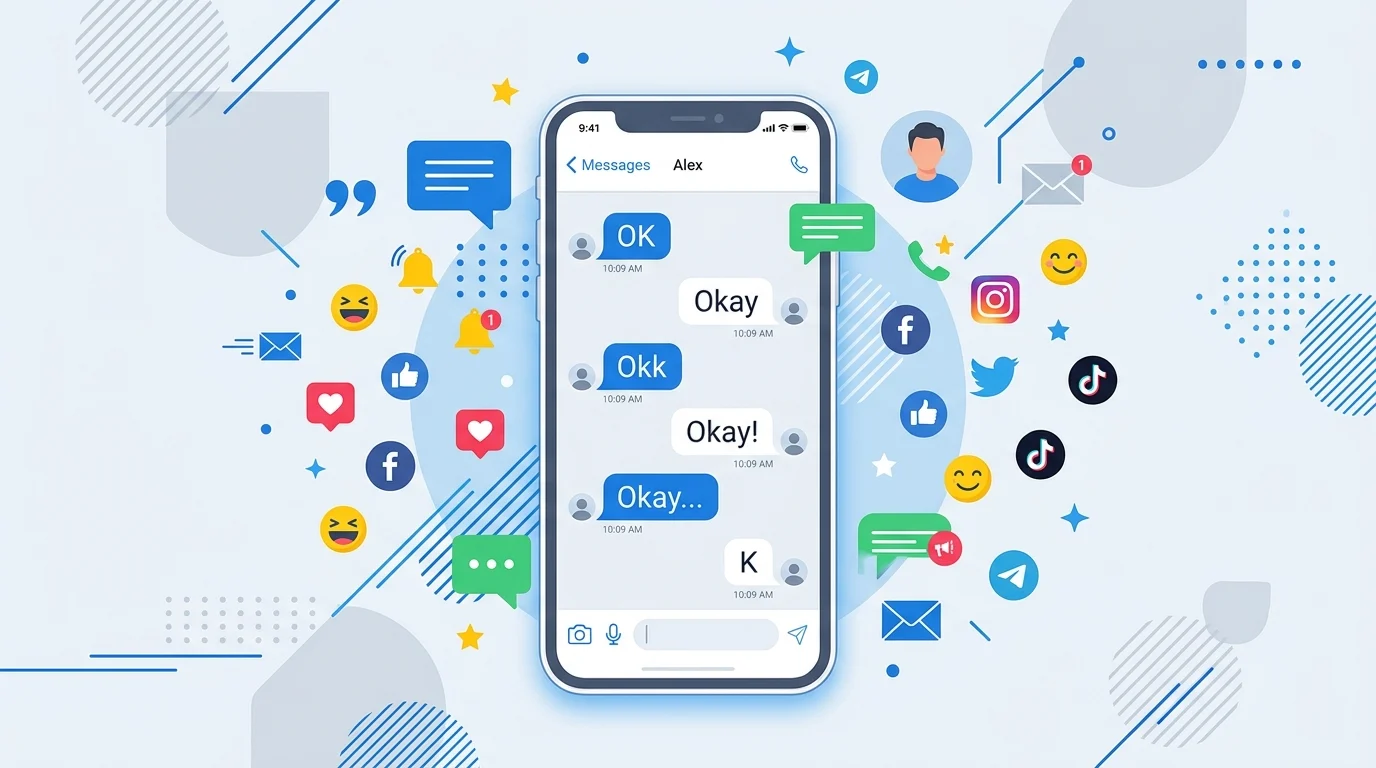
Different Ways “Okay” Is Written
One interesting aspect of texting is that small changes in spelling or punctuation can change the tone.
Okay
Friendly and neutral.
OK
Short and direct.
Ok
Casual and common.
Okk
A more relaxed or playful version.
Okkk
Often expresses excitement, friendliness, or emphasis.
Okayyy
Shows enthusiasm or excitement.
Okay!
Sounds cheerful and positive.
Okay 😊
Warm and friendly.
Okay.
Can feel more serious or final depending on the conversation.
Okay…
May suggest hesitation, doubt, or disappointment.
Real-Life Conversation Examples
Conversation Example 1
Emma: Want to grab coffee after work?
Sophia: Okay! See you at 6.
Conversation Example 2
Ryan: The meeting starts at 10 tomorrow.
Jake: Okay, thanks.
Conversation Example 3
Olivia: Sorry, I can’t make it tonight.
Sarah: Okay, maybe next time.
Conversation Example 4
Lucas: Can I borrow your charger?
Noah: Okay, just bring it back tomorrow.
Conversation Example 5
Ava: I accidentally deleted the file.
Emma: Okay… we’ll figure it out.
Platform-Specific Meaning
On WhatsApp, “okay” usually means agreement or confirmation.
Example:
“Okay, I’ll message you later.”
Snapchat
Snapchat users often write:
- Okk
- Okkk
- Okayyy
These versions usually sound more casual and friendly.
In Instagram DMs, “okay” acknowledges a message before the conversation continues.
TikTok
Creators and commenters often reply with:
- Okay 😂
- Okay then
- Okay lol
The meaning depends heavily on emojis.
Facebook Messenger
Facebook conversations typically use “okay” in its traditional sense of agreement.
Discord
Discord users often keep replies short:
- Okay
- Ok
- K
The shorter the response, the more neutral or direct it may sound.
Alternative Meanings
Although “okay” is not an acronym, it can express different emotions depending on context.
It may mean:
- I understand.
- I agree.
- That’s acceptable.
- No problem.
- I’m listening.
- That’s fine.
- I accept your decision.
- I don’t have anything else to add.
Understanding these subtle meanings helps avoid confusion in digital conversations.
Related Text Expressions
People often use similar words instead of “okay.”
Common alternatives include:
- OK
- K
- Alright
- Sure
- Sounds good
- Got it
- Understood
- No problem
- Yep
- Fine
Each has a slightly different tone. For example, “Sounds good” feels more enthusiastic than a simple “K.”
How to Respond to “Okay”
Your reply depends on the conversation.
Examples include:
If someone says:
“Okay.”
You could reply:
- Great!
- Thanks!
- See you then.
- Perfect.
- Appreciate it.
- Sounds good.
- I’ll let you know.
- Talk soon.
- Have a great day.
If “okay” seems hesitant, you might ask:
“Is everything alright?”
This gives the other person an opportunity to explain how they’re feeling.
Common Misinterpretations
One reason texting can be confusing is that people interpret “okay” differently.
For example:
- “Okay.” may seem cold to some people.
- “Okkk!” usually sounds excited.
- “K” can appear dismissive or rushed.
- “Okay…” may suggest disappointment.
These interpretations are influenced by punctuation, relationship dynamics, and previous conversations.
When in doubt, don’t assume a negative meaning. Consider the overall context before drawing conclusions.
When Not to Use “Okay”
Although “okay” works in most situations, there are times when a more detailed response is better.
Avoid using only “okay” when:
- Someone shares emotional news.
- A detailed answer is expected.
- You’re responding to a professional email.
- Clarification is needed.
- The situation requires empathy.
Instead of simply saying “okay,” consider responding with a thoughtful message.
For example:
“I’m sorry to hear that.”
“Thanks for letting me know.”
“I understand. Let me know if you need anything.”
These replies show more engagement and empathy.
Usage Tips
To use “okay” naturally:
- Match the tone of the conversation.
- Add emojis when appropriate.
- Avoid replying with only “K” unless you’re very familiar with the person.
- Use punctuation carefully.
- If you’re excited, write “Okay!” instead of “Okay.”
Remember that texting doesn’t include voice tone, so small details matter.
Frequently Asked Questions
What does “okay” mean in text?
It usually means agreement, acknowledgment, understanding, or acceptance.
Is “okay” always positive?
No. Its tone depends on context, punctuation, and the surrounding conversation.
Does “Okay.” sound rude?
Not necessarily. Some people view the period as neutral, while others interpret it as serious or distant.
Is “K” the same as “okay”?
“K” is a shortened version of “okay,” but it often feels more abrupt.
What does “Okay…” mean?
It usually suggests hesitation, uncertainty, or disappointment.
Is “Okkk” different from “Okay”?
Yes. “Okkk” often sounds more playful, enthusiastic, or friendly.
Can “okay” mean “I’m upset”?
Sometimes. Context determines whether it expresses genuine agreement or hidden frustration.
Should I worry if someone only replies with “Okay”?
Not always. Many people simply prefer short replies.
Is “okay” formal?
It can be used in both casual and professional conversations, although more formal alternatives such as “Understood” may be preferred in business settings.
Why is “okay” one of the most common text replies?
Because it’s short, versatile, and works in almost every type of conversation.
Conclusion
The okay meaning in text goes far beyond a simple agreement. Depending on the situation, it can express understanding, acceptance, permission, enthusiasm, hesitation, or even subtle frustration. Small differences in spelling, punctuation, capitalization, and emojis can completely change how the message is interpreted.
In most everyday conversations, “okay” simply means that someone understands or agrees with what’s been said. However, paying attention to context helps you recognize the intended tone and avoid misunderstandings.
Whether you’re texting friends, chatting on WhatsApp, replying on Instagram, or messaging someone on Snapchat, understanding the different meanings of “okay” can help you communicate more effectively and interpret conversations with greater confidence.
Discover More:-
- TYTT Meaning in Text: What It Means, How to Use It, Examples & More
- BY Meaning in Text Slang: What It Means, How to Use It, Examples & More

Amelia Brooks is a professional content writer and digital publishing specialist with a passion for creating clear, engaging, and informative content. She has extensive experience writing about technology, business, lifestyle, and online services.