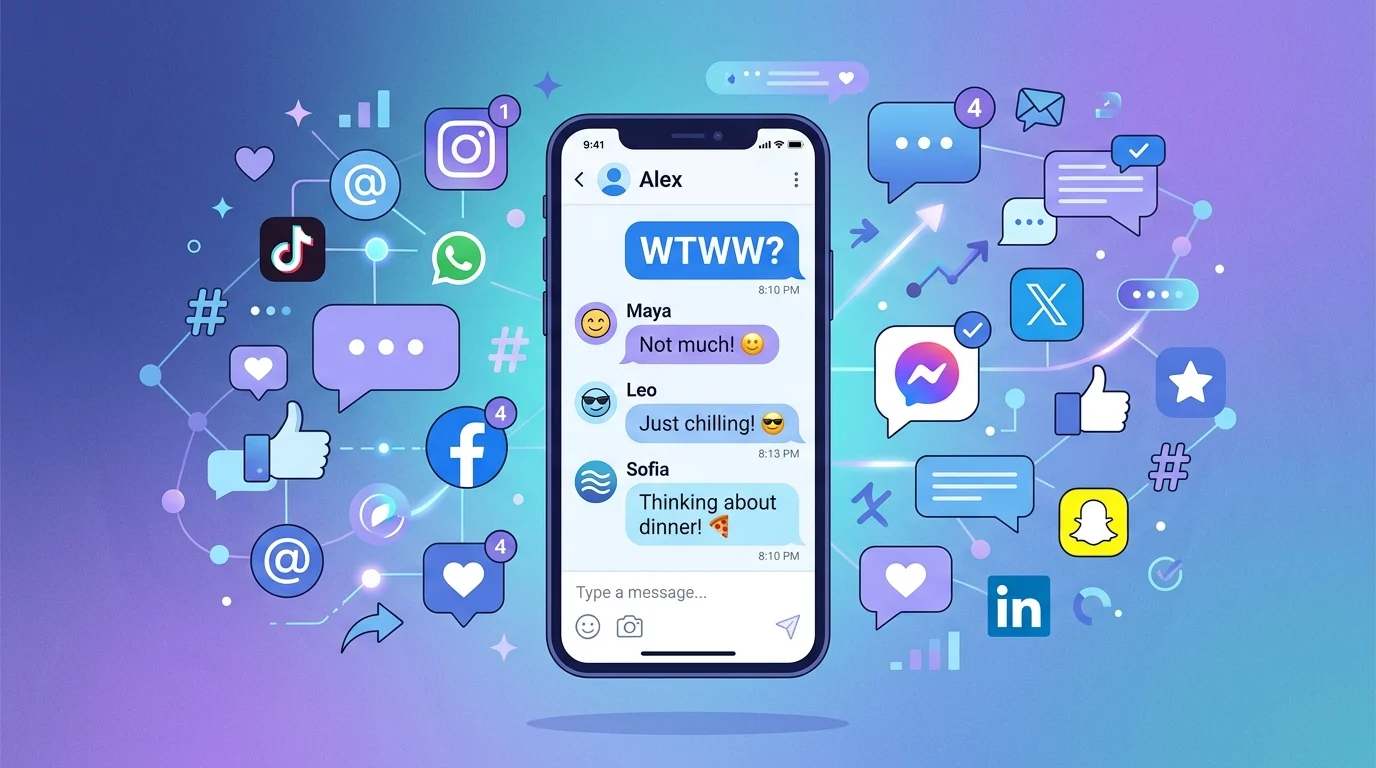
Quick Ans: WTWW in text most commonly means “What’s the Word?” It’s a casual internet abbreviation used to ask someone what’s happening, what’s new, or what they’re up to. You’ll often see it in text messages, Snapchat, Instagram DMs, Discord chats, and other social media conversations.
If you’ve received a message that simply says “WTWW”, you might be wondering what it means. Like many texting abbreviations, WTWW is designed to make conversations faster while maintaining a casual, friendly tone.
The abbreviation is commonly interpreted as “What’s the Word?” In everyday conversations, this phrase is another way of asking “What’s up?”, “What’s going on?”, or “How are things?”
Whether you’re chatting with friends, messaging someone on Snapchat, or catching up in a gaming community, understanding WTWW meaning in text can help you respond naturally and avoid confusion.
In this guide, you’ll learn the definition of WTWW, how people use it on different platforms, conversation examples, possible alternative meanings, reply ideas, common mistakes, and frequently asked questions.
Quick Answer Box
| Topic | Answer |
|---|---|
| Most Common Meaning | What’s the Word? |
| Type | Internet slang abbreviation |
| Used On | Text messages, Snapchat, Instagram, TikTok, Discord, WhatsApp, Facebook |
| Tone | Casual, friendly |
| Purpose | Asking what’s happening or checking in |
| Example | “WTWW? Haven’t talked in a while.” |
What Does WTWW Mean in Text?
In texting, WTWW usually stands for:
“What’s the Word?”
It’s an informal greeting used to start a conversation or check in with someone.
Rather than asking:
- What’s up?
- What’s going on?
- What’s new?
- How have you been?
Someone may simply type:
WTWW?
It’s quick, friendly, and commonly understood among people familiar with internet slang.
Full Definition
The phrase “What’s the Word?” has been used in spoken English for years as a casual greeting. Online, people shorten it to WTWW to save time while texting.
Although the wording sounds slightly different from “What’s up?”, both expressions serve nearly the same purpose.
People use WTWW when they want to:
- Start a conversation
- Check in with a friend
- Ask what’s happening
- See if someone is available
- Catch up after some time apart
Unlike many internet abbreviations, WTWW doesn’t have a negative or sarcastic meaning. It’s simply a friendly conversation starter.
Context and Usage
The meaning of WTWW depends on the conversation, but it almost always functions as a greeting.
Checking In
Example:
WTWW?
Meaning:
“What’s new?”
Starting a Conversation
Someone might send:
WTWW bro?
They’re simply saying hello and asking how things are going.
Asking About Plans
Example:
WTWW tonight?
Meaning:
“What’s happening tonight?”
Catching Up
If two friends haven’t spoken for a while, one might message:
WTWW? Long time no talk.
They’re inviting conversation.
Real-Life Conversation Examples
Conversation Example 1
Jake: WTWW?
Ryan: Not much. Just got home from work.
Jake: Nice, want to play some games later?
Conversation Example 2
Emma: Hey!
Sophia: WTWW?
Emma: Just studying. You?
Sophia: Watching Netflix.
Conversation Example 3
Chris: WTWW this weekend?
Alex: Thinking about going hiking.
Chris: Count me in.
Conversation Example 4
Olivia: WTWW? Haven’t heard from you.
Sarah: I’ve been busy with college.
Olivia: Glad you’re doing well.
Conversation Example 5
Noah: WTWW tonight?
Lucas: Probably just staying home.
Noah: Same here.
Platform-Specific Meaning
Snapchat
WTWW is commonly used as a casual greeting.
Example:
“WTWW?”
The sender is simply asking what’s going on.
People often send WTWW through direct messages when reconnecting with friends.
Example:
“WTWW? Haven’t seen your posts lately.”
TikTok
Although less common in comments, creators and followers sometimes use WTWW in direct conversations.
Friends use WTWW to begin chats instead of typing longer greetings.
Discord
Gaming communities frequently use WTWW before asking teammates to join a game.
Example:
“WTWW? Anyone playing tonight?”
Facebook Messenger
WTWW appears in casual conversations between friends and family members as another way to say “What’s up?”
Alternative Meanings of WTWW
Unlike many abbreviations, WTWW doesn’t have many widely recognized meanings.
However, depending on context, it may occasionally refer to:
- Internal team abbreviations
- Organization-specific acronyms
- Personal shorthand among friends
In almost every casual text conversation, What’s the Word? is the intended meaning.
Related Text Abbreviations
WTWW belongs to a group of conversational greetings used online.
Examples include:
- WYD – What You Doing?
- WSG – What’s Good?
- WSP – What’s Up?
- SUP – What’s Up?
- HYD – How You Doing?
- HRU – How Are You?
- GM – Good Morning
- GN – Good Night
- BRB – Be Right Back
- TTYL – Talk To You Later
These abbreviations make texting faster while keeping conversations informal.
How to Respond to WTWW
Since WTWW means “What’s the Word?”, you can answer naturally.
Examples include:
- Not much, you?
- Just relaxing.
- Working today.
- Watching a movie.
- Getting ready for class.
- Nothing exciting.
- Just got home.
- What’s up with you?
You can also ask the question back.
Example:
Friend: WTWW?
You: Not much! WTWW with you?
Common Misinterpretations
Because WTWW isn’t as common as abbreviations like LOL or BRB, some people assume it’s a technical acronym.
In reality, if someone sends:
WTWW?
They’re usually just saying hello.
Looking at the conversation makes the meaning obvious.
If the message is casual and friendly, “What’s the Word?” is almost certainly correct.
When Not to Use WTWW
Avoid using WTWW in:
- Professional emails
- Business reports
- Academic writing
- Job applications
- Official workplace communication
The abbreviation works best in casual digital conversations among friends or people familiar with texting slang.
Usage Tips
To use WTWW naturally:
- Send it to friends, not formal contacts.
- Use it as a conversation starter.
- Pair it with another question if needed.
- Don’t overuse abbreviations when clarity is important.
- Consider whether the other person is familiar with internet slang.
Using complete greetings may be a better choice when messaging someone who isn’t comfortable with abbreviations.
Frequently Asked Questions
What does WTWW mean in text?
WTWW usually means “What’s the Word?”
Is WTWW the same as “What’s up?”
Yes. Both expressions are commonly used to ask what’s happening or how someone is doing.
Is WTWW internet slang?
Yes. It’s an informal texting abbreviation.
Where is WTWW commonly used?
You’ll mostly see it on Snapchat, Instagram, WhatsApp, Discord, Facebook Messenger, and text messages.
Is WTWW popular?
It’s less common than abbreviations like WYD or WSG but is still recognized in many online communities.
Can I use WTWW in professional messages?
No. It’s best reserved for casual conversations.
How should I reply to WTWW?
Simply answer with what you’re doing or ask the question back.
Does WTWW have multiple meanings?
In casual texting, it almost always means “What’s the Word?”
Why do people type WTWW instead of writing the full phrase?
It’s faster, saves typing, and matches the informal style of online conversations.
Is WTWW used by younger people?
Yes. Teenagers, college students, gamers, and social media users are more likely to use WTWW than older generations.
Conclusion
The WTWW meaning in text is most commonly “What’s the Word?”—a casual way of asking “What’s up?”, “What’s going on?”, or “What’s new?” It’s a friendly greeting that helps start conversations across messaging apps and social media platforms.
Whether you see WTWW in a Snapchat message, Instagram DM, Discord chat, or a regular text message, it’s usually an invitation to catch up or continue a conversation. The abbreviation keeps messages short while maintaining a relaxed and approachable tone.
Now that you understand what WTWW means, you’ll be able to recognize it instantly, respond confidently, and use it naturally in your own casual conversations.

Ella Parker is a professional content writer with a passion for creating clear, engaging, and well-researched articles. She focuses on delivering valuable insights and practical information across business, technology, and lifestyle topics.