Quick Answer: In Scottish, “bonnie” (also spelled “bonny”) is an adjective that means beautiful, pretty, attractive, or fine . It is a cherished Scots word used to describe someone or something pleasing to look at, and it also serves as a term of endearment and a popular given name.
Few words capture the warmth and character of Scottish speech quite like “bonnie.” It appears in beloved songs like “My Bonnie Lies over the Ocean,” in the historic nickname “Bonnie Prince Charlie,” and in everyday Scottish conversation when someone spots a lovely view, a healthy baby, or a pretty lass. But its meaning runs deeper than simple physical beauty. “Bonnie” carries a sense of goodness, cheerfulness, and affection that reflects the generous spirit of Scots culture.
Understanding what “bonnie” means in Scottish involves looking at its dictionary definitions, its grammatical uses, its role as a term of endearment, and its journey from a descriptive word to a beloved personal name. This guide explores every layer of this small but significant word, giving you a complete picture of how and why it is used in Scotland and beyond.
The Core Meaning of “Bonnie” in Scots
The Dictionaries of the Scots Language define “bonny” or “bonnie” as an adjective meaning “beautiful, pretty, fair” . The Oxford Advanced Learner’s Dictionary confirms this, describing it as a dialect word, especially in Scottish English, meaning “very pretty; attractive” . Merriam-Webster similarly notes its chiefly Scottish usage: “very pretty or attractive” .
The word’s origins trace back to the Middle French bonne (good), which itself derives from the Latin bonus (good) . This etymological root explains why “bonnie” in Scots carries not just aesthetic meaning but also a sense of goodness and quality. A “bonnie” thing is not only pleasant to look at but also genuinely fine and worthy.
Common Uses in Everyday Scottish Speech
The Scots use “bonnie” in a variety of natural contexts:
- A bonnie lass: A pretty girl or young woman
- A bonnie baby: A healthy, attractive infant
- A bonnie day: A fine, beautiful day
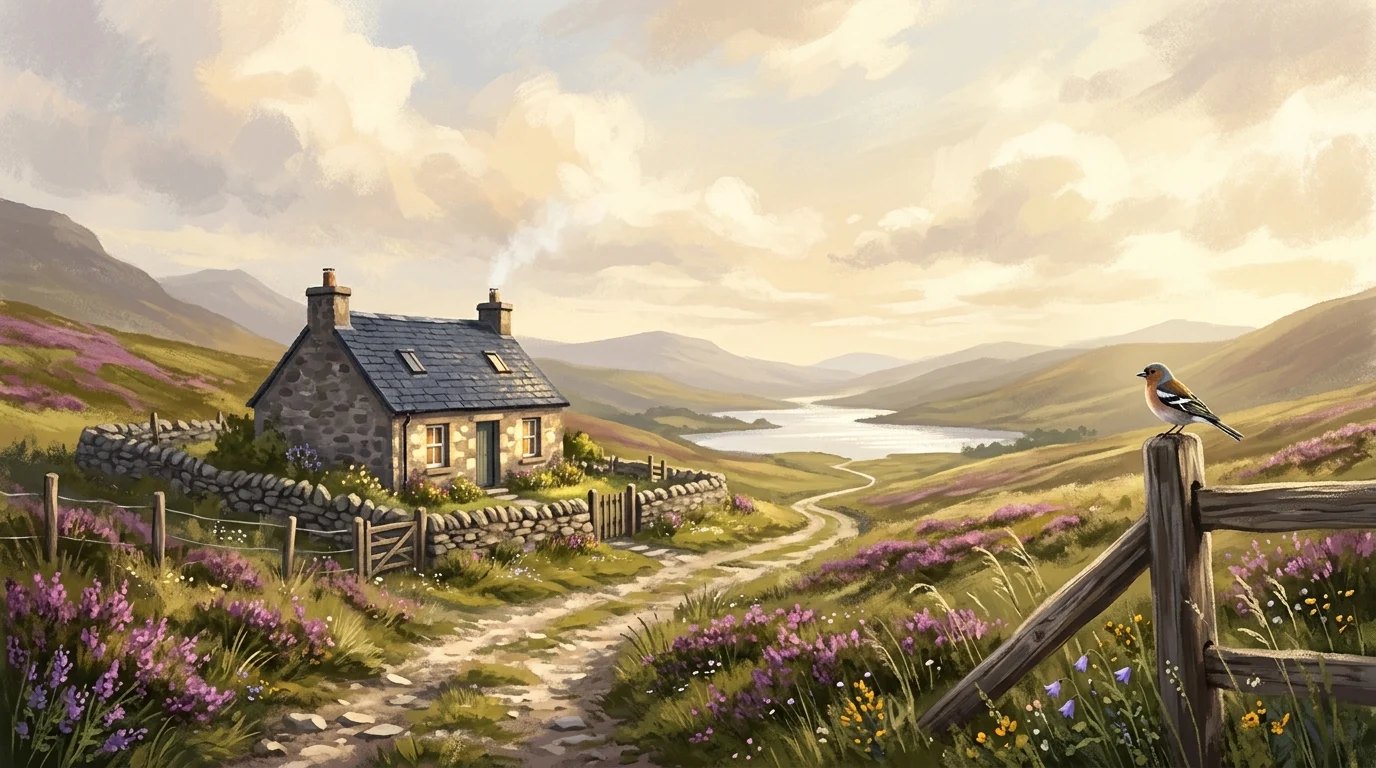
- A bonnie view: A lovely landscape or scenery
The word is flexible and warm, applicable to people, places, weather, and objects alike.
Beyond Beauty: Additional Layers of Meaning
While “beautiful” is the primary translation, the Scots use “bonnie” in several extended senses that reveal the word’s richness.
A Term of Endearment and Appreciation
The Dictionaries of the Scots Language list a third definition: “a term of eulogy or appreciation or endearment” . In this sense, “bonnie” functions like “dear” or “lovely” in English. A Scottish speaker might call a friend “bonnie” not because of their appearance but because of affection. The traditional song “My Bonnie” uses the word this way: the “bonnie” in the song refers to a beloved friend or romantic interest, not simply a pretty face .
Great or Considerable
In some Scottish dialects, “bonnie” can mean “great, considerable” . A “bonnie differ” means a significant difference. A “bonnie fright” means a considerable scare. This usage extends the word beyond beauty into the realm of magnitude and significance.
Ironic Use
Like many warm words, “bonnie” can be used ironically. The Scots Language dictionary notes that it is sometimes used sarcastically to mean “fine” in a disapproving tone, as in “a bonny mess” or “a bonny state of affairs” . This ironic twist is common in Scottish humor and adds another layer to the word’s versatility.
“Bonnie” as a Scottish Name
Beyond its life as an adjective, Bonnie is a well-established Scottish given name, used for both girls and the boys, though it is far more common for girls . The name directly derives from the Scots word for “pretty” or “attractive,” making it one of the clearest examples of a name born from a descriptive term .
The Name’s History and Popularity
Bonnie as a name gained wider recognition through cultural touchstones. The traditional Scottish folk song “My Bonnie Lies over the Ocean” popularized the word internationally . In literature, Bonnie Blue Butler, the daughter of Rhett Butler and Scarlett O’Hara in Gone with the Wind, carried the name to American audiences . The name enjoyed a vogue in the latter half of the 20th century and remains recognizable in English-speaking countries today .
The name is also sometimes used as a pet form of Bonita, a Spanish name meaning “pretty,” though its Scottish identity remains primary .
“Bonnie” in Scottish Culture and Phrases
The word appears in several fixed expressions and cultural references that every learner of Scottish English should recognize.
Bonnie Prince Charlie
Charles Edward Stuart, the Jacobite claimant to the British throne, is remembered in history as “Bonnie Prince Charlie.” The nickname reflects both his youthful charm and the romanticized image of the Jacobite cause. It is one of the most famous uses of “bonnie” attached to a historical figure.
My Bonnie Lies over the Ocean
This traditional Scottish folk song is one of the most widespread uses of the word in popular culture. The “bonnie” in the song refers to a beloved person across the sea, blending affection with the word’s core meaning of beauty and goodness .
Bonnie Doon
The River Doon in Ayrshire, celebrated in Robert Burns’s poem “Banks and Braes o’ Bonnie Doon,” carries the descriptive word in its affectionate nickname. Burns’s usage captures the Scottish attachment to beautiful landscapes described with simple, heartfelt language .
Frequently Asked Questions About “Bonnie” in Scottish
What does “bonnie” mean in Scottish slang?
In Scottish slang and everyday speech, “bonnie” means pretty, beautiful, or attractive. It can also be used as a term of endearment meaning “dear” or “lovely,” and in some contexts it means “great” or “considerable” .
Is “bonnie” a Scottish or Irish word?
“Bonnie” is primarily Scottish. It comes from the Scots language and is most strongly associated with Scotland. While it may appear in Irish English, its origins and cultural identity are Scottish .
Why is it spelled both “bonnie” and “bonny”?
Both spellings are accepted variants of the same word. “Bonny” is the older spelling found in the Dictionaries of the Scots Language, while “bonnie” is a common modern variant. The two are interchangeable .
Is “Bonnie” a boy’s name or a girl’s name?
Bonnie is traditionally a Scottish name for either girls or boys, though it is far more commonly used for girls in modern times .
What does “a bonnie lass” mean?
“A bonnie lass” is a Scottish phrase meaning “a pretty girl” or “a beautiful young woman.” It combines “bonnie” (pretty) with “lass” (girl or young woman) .
Conclusion
To answer the question of what “bonnie” means in Scottish: it is a word of warmth, beauty, and affection. At its core, it means pretty, beautiful, or fine, but its uses extend far beyond appearance. The Scots use “bonnie” to describe lovely people and places, to express endearment, to mean something considerable, and even to tease with gentle irony. It lives in the name Bonnie, in the song “My Bonnie Lies over the Ocean,” and in the historic nickname of Bonnie Prince Charlie. Whether you encounter it in a poem by Robert Burns or in a casual conversation on a Scottish street, “bonnie” carries the unmistakable mark of Scottish character: straightforward, generous, and full of heart.