Quick Ans: Autonomous means having the ability to operate, make decisions, or function independently without direct human control or outside influence. The word is commonly used to describe people, vehicles, robots, organizations, governments, and systems that can act on their own while following established rules or objectives.
The word autonomous has become increasingly common in today’s world, especially with the rise of artificial intelligence, self-driving vehicles, robotics, and smart technology. However, autonomous isn’t limited to technology—it also describes people, organizations, regions, and systems that can function independently without relying on constant supervision.
Whether you’ve seen the term in a news article, a business report, a technology blog, or a classroom discussion, understanding the autonomous meaning helps you interpret it correctly in different contexts.
This guide explains everything you need to know about the word autonomous, including its definition, pronunciation, examples, real-life usage, industry applications, synonyms, antonyms, common mistakes, related words, and answers to frequently asked questions.
Quick Answer Box
| Topic | Answer |
|---|---|
| Word | Autonomous |
| Meaning | Independent; able to operate or make decisions without outside control |
| Part of Speech | Adjective |
| Pronunciation | aw-TON-uh-mus |
| Common Uses | Technology, education, government, business, medicine, robotics |
| Opposite | Dependent, controlled, supervised |
What Does Autonomous Mean?
Autonomous describes someone or something that has the ability to function independently. Instead of relying on constant instructions, an autonomous person, machine, or organization can make decisions or perform tasks on its own.
In simple terms, autonomous means:
- Self-governing
- Independent
- Self-directed
- Self-operating
- Able to function without continuous supervision
The exact meaning depends on the context, but the central idea is always independence.
Full Definition
According to standard English usage, autonomous refers to the ability to govern, control, or manage oneself without external authority.
The word comes from the Greek roots:
- Auto = self
- Nomos = law or rule
Together, they describe something that follows its own rules or governs itself.
Today, autonomous is widely used in many fields, including technology, politics, healthcare, transportation, manufacturing, education, and psychology.
Context and Usage
The meaning of autonomous changes slightly depending on where it is used.
Technology
In technology, autonomous describes machines or software that can perform tasks automatically with little or no human intervention.
Example:
“An autonomous drone inspected the construction site.”
Transportation
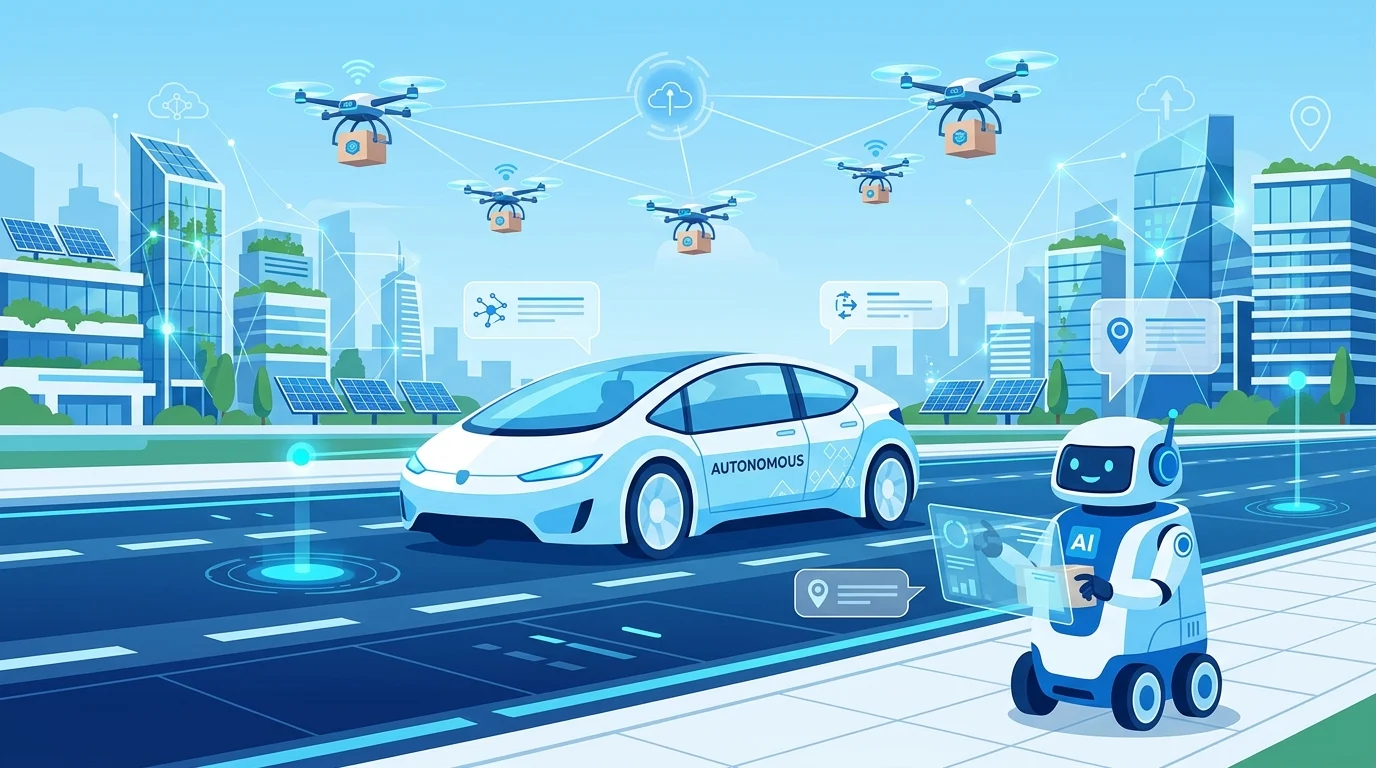
One of the most familiar examples is autonomous vehicles.
Example:
“Several companies are testing autonomous cars.”
These vehicles use cameras, sensors, GPS, radar, and artificial intelligence to navigate roads.
Government
An autonomous region has the authority to govern many of its own affairs while remaining part of a larger country.
Example:
“The autonomous territory manages its local education system.”
Business
Businesses may create autonomous teams that work independently and make decisions without needing constant approval from senior management.
Example:
“Our autonomous project team completed the product ahead of schedule.”
Education
Students are often encouraged to become autonomous learners.
This means they:
- Study independently.
- Manage their own time.
- Set learning goals.
- Solve problems without relying entirely on teachers.
Real-Life Examples
Example 1
“The autonomous robot cleaned the warehouse overnight.”
Meaning: The robot worked independently without human assistance.
Example 2
“She is an autonomous worker who rarely needs supervision.”
Meaning: She manages her responsibilities independently.
Example 3
“The company created autonomous departments.”
Meaning: Each department makes many of its own decisions.
Example 4
“Researchers developed an autonomous underwater vehicle.”
Meaning: The vehicle navigates underwater on its own.
Example 5
“Children gradually become more autonomous as they grow older.”
Meaning: They become more independent and responsible.
Industry-Specific Meaning
Artificial Intelligence
AI systems become autonomous when they can analyze information, make decisions, and perform actions without requiring continuous human input.
Examples include:
- AI assistants
- Delivery robots
- Warehouse automation
- Smart factories
Robotics
Autonomous robots perform tasks by interpreting sensor data and adapting to changing environments.
Examples:
- Cleaning robots
- Agricultural robots
- Security patrol robots
Healthcare
Hospitals use autonomous systems to:
- Deliver supplies
- Assist surgeries
- Transport equipment
- Monitor patients
These systems improve efficiency while reducing repetitive manual work.
Aviation
Autonomous aircraft are being developed for cargo transport, surveillance, mapping, and emergency response.
Manufacturing
Factories increasingly rely on autonomous production systems to improve speed, quality, and consistency.
Synonyms of Autonomous
Several words have meanings similar to autonomous, although each has a slightly different nuance.
Common synonyms include:
- Independent
- Self-governing
- Self-directed
- Self-sufficient
- Self-reliant
- Free
- Uncontrolled
- Stand-alone
- Automatic (in certain contexts)
- Self-operating
Choosing the right synonym depends on the sentence and subject.
Antonyms of Autonomous
Words opposite in meaning include:
- Dependent
- Controlled
- Supervised
- Restricted
- Managed
- Directed
- Subordinate
- Assisted
These terms describe situations where outside guidance or control is required.
Autonomous vs Automatic
These two words are often confused.
Autonomous
An autonomous system can make decisions based on its environment.
Example:
“An autonomous vehicle chooses its route.”
Automatic
An automatic system performs a fixed action whenever triggered.
Example:
“An automatic door opens when someone approaches.”
In short:
- Automatic follows predefined instructions.
- Autonomous can adapt and make decisions.
Common Misunderstandings
Many people assume autonomous always means “fully independent.”
In reality, autonomy often exists on a spectrum.
For example:
- A self-driving car may still require human oversight.
- An autonomous department may still report to company leadership.
- An autonomous region may remain part of a larger nation.
Understanding the level of independence is important.
When to Use the Word Autonomous
Use autonomous when describing something that:
- Operates independently.
- Makes decisions without constant supervision.
- Controls its own activities.
- Has freedom within defined limits.
Examples:
- Autonomous drone
- Autonomous learner
- Autonomous vehicle
- Autonomous region
- Autonomous robot
- Autonomous organization
Usage Tips
To use the word correctly:
- Match it with subjects capable of independent action.
- Avoid confusing it with “automatic.”
- Consider the context before choosing synonyms.
- Use it in formal, academic, technical, and professional writing.
- Remember that autonomy often exists within certain boundaries.
Related Words
Words closely related to autonomous include:
- Independence
- Automation
- Artificial Intelligence
- Robotics
- Machine Learning
- Self-driving
- Self-governance
- Autonomy
- Decision-making
- Smart Systems
Understanding these related terms helps build a stronger vocabulary around modern technology and organizational structures.
Frequently Asked Questions
What does autonomous mean?
Autonomous means having the ability to operate or make decisions independently without constant outside control.
Is autonomous the same as independent?
They are similar, but autonomous often emphasizes self-governance or decision-making, while independent is a broader term.
What is an autonomous car?
An autonomous car is a vehicle designed to drive itself using sensors, cameras, software, and artificial intelligence.
What is an autonomous robot?
It is a robot capable of performing tasks independently by sensing its environment and making decisions.
Can a person be autonomous?
Yes. An autonomous person makes decisions independently and manages their own responsibilities.
What is an autonomous region?
It is an area with the authority to govern certain internal affairs while remaining part of a larger country.
Is autonomous a positive word?
Generally, yes. It often describes responsibility, independence, innovation, and efficiency.
What’s the difference between autonomous and automatic?
Automatic systems follow fixed instructions, while autonomous systems can adapt and make decisions based on changing conditions.
Is autonomous used only in technology?
No. It is also used in politics, education, psychology, business, healthcare, and many other fields.
What is the noun form of autonomous?
The noun form is autonomy, which refers to the state of being self-governing or independent.
Conclusion
The autonomous meaning centers on the idea of independence and self-governance. Whether describing a person, a robot, a vehicle, an organization, or a region, the word refers to the ability to function or make decisions without constant external control.
As technology continues to evolve, autonomous systems are becoming a larger part of everyday life, from self-driving vehicles and AI-powered assistants to smart factories and autonomous drones. At the same time, the term remains equally important in education, business, government, and psychology, where it emphasizes responsibility, freedom, and independent decision-making.
Understanding the meaning of autonomous, its real-world applications, and the difference between related terms like automatic and independent will help you use the word accurately in both everyday conversations and professional communication.
Discover More:-
- Occupation Meaning: Definition, Types, Examples & How It’s Used 2026
- Progressive Meaning: Definition, Uses, Examples & Explained 2026

Amelia Brooks is a professional content writer and digital publishing specialist with a passion for creating clear, engaging, and informative content. She has extensive experience writing about technology, business, lifestyle, and online services.