Quick Ans: Mitigation means reducing, minimizing, or lessening the severity, impact, or risk of something harmful or undesirable. It is commonly used in business, law, healthcare, environmental science, cybersecurity, and everyday life to describe actions taken to prevent problems or reduce their negative effects.
The word mitigation appears in many different situations, from business meetings and legal discussions to weather reports, cybersecurity, healthcare, and environmental planning. Although it may sound like a technical term, its meaning is actually quite simple.
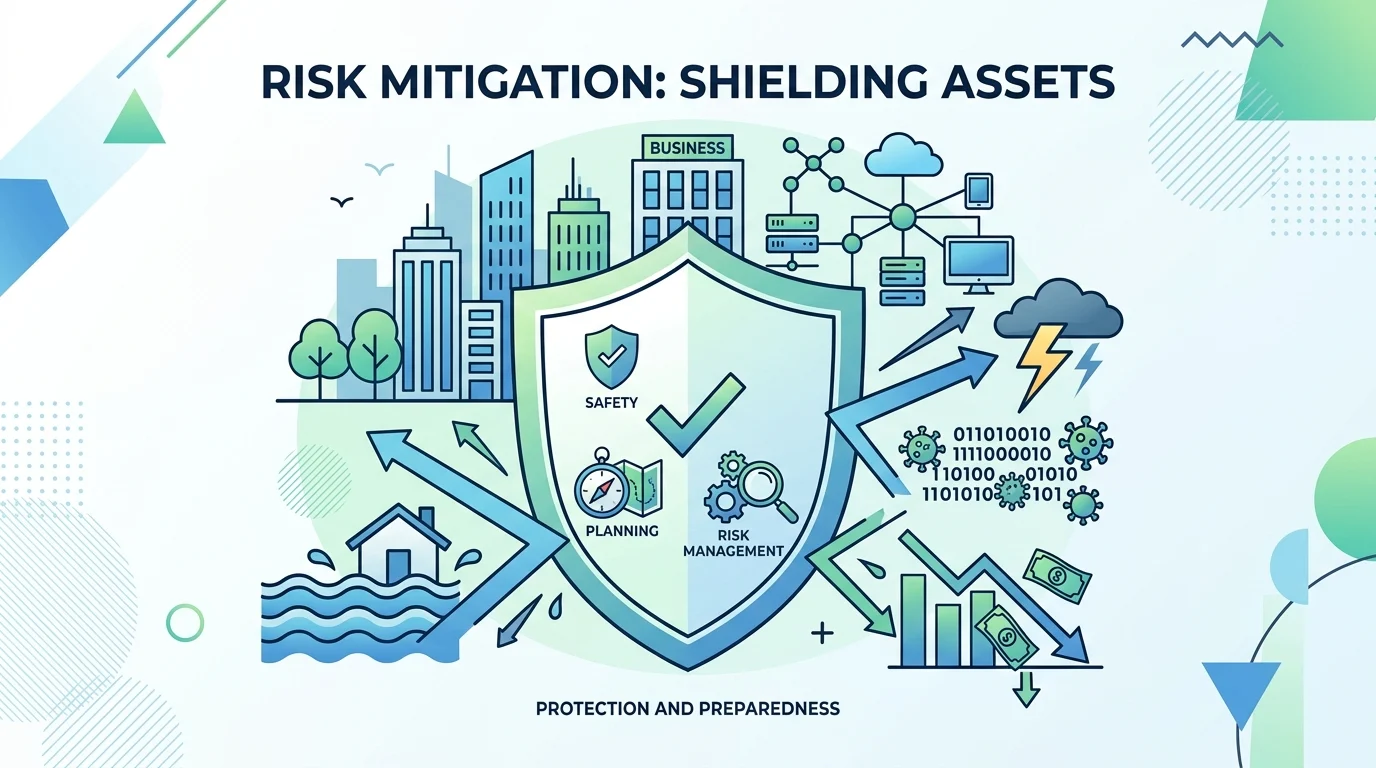
In general, mitigation refers to taking steps to reduce the seriousness of a problem before or after it occurs. Rather than eliminating a risk entirely, mitigation focuses on making its impact smaller and more manageable.
For example, installing smoke detectors is a form of fire mitigation because they help reduce the damage a fire can cause. Similarly, companies create risk mitigation plans to prepare for unexpected events, while governments implement flood mitigation projects to protect communities from natural disasters.
This guide explains the complete mitigation meaning, including its definition, common uses, real-life examples, different types, industry-specific applications, related terms, mistakes to avoid, and answers to frequently asked questions.
Quick Answer Box
| Topic | Answer |
|---|---|
| Meaning | Reducing or minimizing the impact of a problem or risk |
| Part of Speech | Noun |
| Common Uses | Business, law, healthcare, environment, cybersecurity, construction |
| Opposite | Aggravation, escalation, intensification |
| Example | Installing flood barriers is a form of flood mitigation. |
What Does Mitigation Mean?
Mitigation means taking action to reduce the severity, likelihood, or consequences of a harmful event.
Unlike prevention, which aims to stop something from happening completely, mitigation accepts that some risks may still occur but seeks to reduce the damage they cause.
For example:
- Wearing a seatbelt mitigates injuries during an accident.
- Backing up files mitigates data loss.
- Installing antivirus software mitigates cyber threats.
- Purchasing insurance mitigates financial losses.
In each case, the action does not eliminate the risk entirely but helps reduce its impact.
Full Definition
According to general English usage, mitigation refers to the act of making something less severe, harmful, painful, or serious.
It commonly involves:
- Reducing risks
- Limiting damage
- Lowering financial losses
- Improving safety
- Managing uncertainty
- Preparing for emergencies
Mitigation strategies are often part of planning processes designed to improve resilience and minimize future problems.
Context and Usage
The word mitigation is used across many industries.
Business
Businesses use mitigation to reduce operational risks.
Examples include:
- Risk management plans
- Insurance policies
- Employee training
- Backup systems
- Financial reserves
Law
In legal settings, mitigation refers to circumstances that reduce the seriousness of an offense or lessen penalties.
Example:
“The lawyer presented mitigating evidence during sentencing.”
Environmental Science
Environmental mitigation aims to reduce damage caused by pollution, climate change, or development.
Examples include:
- Tree planting
- Wetland restoration
- Wildlife conservation
- Carbon reduction projects
Healthcare
Doctors use mitigation strategies to reduce disease risks.
Examples include:
- Vaccinations
- Preventive screenings
- Lifestyle changes
- Protective equipment
Cybersecurity
IT professionals implement mitigation measures such as:
- Firewalls
- Encryption
- Multi-factor authentication
- Regular software updates
- Disaster recovery plans
Real-Life Examples
Example 1: Flood Mitigation
A city builds stronger drainage systems and flood barriers before the rainy season.
Result:
Flood damage is significantly reduced.
Example 2: Business Risk Mitigation
A company stores backups in the cloud.
If a server fails, business operations continue with minimal disruption.
Example 3: Health Mitigation
A person receives a flu vaccine.
Although infection is still possible, the severity of illness is often reduced.
Example 4: Cybersecurity Mitigation
A business enables multi-factor authentication.
Hackers find it much harder to access employee accounts.
Example 5: Construction Mitigation
Builders install safety barriers and protective equipment on construction sites.
This helps reduce workplace injuries.
Types of Mitigation
Risk Mitigation
Risk mitigation focuses on identifying potential risks and reducing their impact before problems occur.
Disaster Mitigation
Governments invest in infrastructure designed to reduce damage from natural disasters.
Examples include:
- Earthquake-resistant buildings
- Storm shelters
- Flood walls
Environmental Mitigation
Projects intended to reduce environmental damage.
Examples:
- Reforestation
- Renewable energy
- Pollution control
Financial Mitigation
Businesses reduce financial risks through:
- Insurance
- Diversification
- Emergency funds
- Budget planning
Cyber Risk Mitigation
Organizations strengthen digital security through:
- Regular monitoring
- Software updates
- Employee cybersecurity training
- Data encryption
Related Words and Synonyms
Words commonly associated with mitigation include:
- Reduction
- Prevention
- Protection
- Control
- Limitation
- Management
- Improvement
- Safeguarding
- Risk reduction
- Damage control
Although similar, each word has a slightly different meaning depending on the situation.
Mitigation vs Prevention
People often confuse these two terms.
| Mitigation | Prevention |
|---|---|
| Reduces impact | Stops something from happening |
| Accepts some risk remains | Attempts to eliminate risk |
| Focuses on limiting damage | Focuses on avoiding the event |
Example:
Installing smoke alarms is mitigation.
Preventing electrical faults through proper wiring is prevention.
Both strategies are important and often work together.
Common Misinterpretations
Many people assume mitigation means completely solving a problem.
It does not.
Mitigation simply reduces the seriousness or likelihood of negative outcomes.
Another misconception is that mitigation only applies to disasters.
In reality, it is used in nearly every industry, including finance, healthcare, education, engineering, and technology.
When Is Mitigation Important?
Mitigation becomes especially important when risks cannot be eliminated entirely.
Examples include:
- Natural disasters
- Cyberattacks
- Financial uncertainty
- Health risks
- Workplace hazards
- Climate change
- Construction projects
- Large business operations
Organizations that invest in mitigation often recover more quickly from unexpected events.
Usage Tips
To use the word mitigation correctly:
- Use it when discussing reducing risks rather than eliminating them.
- Consider the context—legal, environmental, financial, or technical.
- Pair it with words like risk, disaster, environmental, cybersecurity, or financial.
- Avoid confusing mitigation with prevention or resolution.
Using the term accurately helps communicate effective planning and risk management strategies.
Frequently Asked Questions
What does mitigation mean?
Mitigation means reducing the severity, impact, or likelihood of a harmful event.
Is mitigation the same as prevention?
No. Prevention attempts to stop something completely, while mitigation reduces its effects.
What is risk mitigation?
Risk mitigation involves identifying potential risks and taking steps to reduce their impact.
What is disaster mitigation?
Disaster mitigation includes measures that reduce damage caused by natural or human-made disasters.
Why is mitigation important?
It helps reduce financial losses, improve safety, and strengthen resilience against unexpected events.
What is environmental mitigation?
Environmental mitigation involves actions that reduce harm to ecosystems and natural resources.
What are mitigation strategies?
These are planned actions designed to reduce identified risks before they become major problems.
Can mitigation eliminate all risks?
No. It minimizes risk but usually cannot remove it entirely.
What industries use mitigation?
Business, finance, healthcare, engineering, cybersecurity, construction, law, environmental science, education, and government all use mitigation strategies.
What is a simple example of mitigation?
Wearing a seatbelt is a simple mitigation measure because it reduces injuries during a car accident.
Conclusion
The mitigation meaning is the process of reducing the severity, likelihood, or impact of a harmful event rather than eliminating it completely. Whether discussing business risks, environmental protection, legal matters, healthcare, cybersecurity, or disaster preparedness, mitigation plays a critical role in minimizing losses and improving outcomes.
Understanding mitigation helps individuals and organizations make better decisions, prepare for uncertainty, and respond more effectively when challenges arise. By applying appropriate mitigation strategies, it becomes possible to reduce damage, improve safety, and create stronger, more resilient systems in both personal and professional life.
Discover More:-

Amelia Brooks is a professional content writer and digital publishing specialist with a passion for creating clear, engaging, and informative content. She has extensive experience writing about technology, business, lifestyle, and online services.