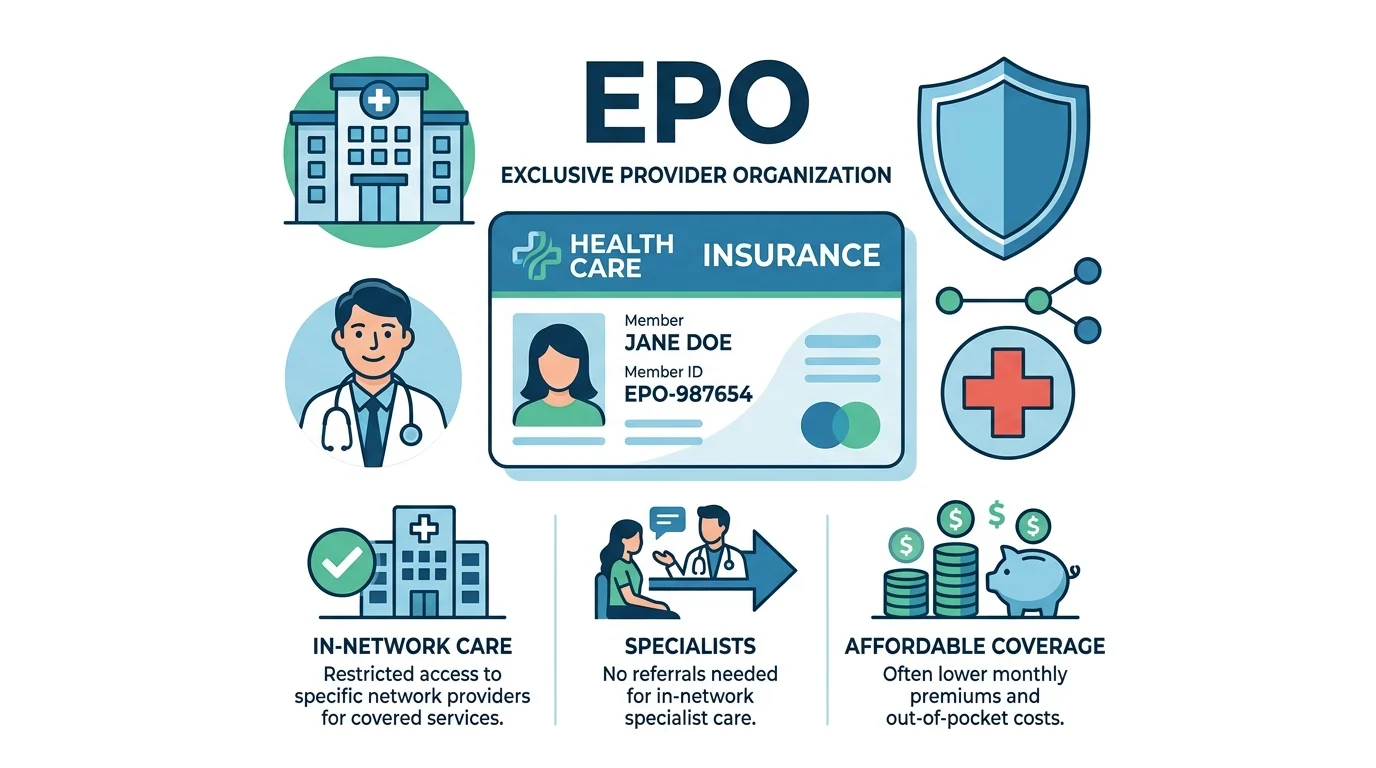
Quick Ans: EPO in health insurance stands for Exclusive Provider Organization. An EPO plan requires members to use doctors, hospitals, and specialists within its network for covered medical services, except in emergencies. Unlike many HMO plans, referrals are usually not required to see specialists, but out-of-network care is generally not covered.
Choosing a health insurance plan can feel overwhelming, especially when you’re faced with unfamiliar terms like EPO, PPO, HMO, and POS. If you’ve come across an EPO plan while shopping for health insurance, you may be wondering what it actually means and whether it’s the right choice for your healthcare needs.
An Exclusive Provider Organization (EPO) is a popular type of health insurance plan that combines some of the advantages of both HMO and PPO plans. It offers flexibility by allowing members to visit specialists without referrals while helping keep costs lower by requiring the use of in-network healthcare providers.
This guide explains what EPO means in health insurance, how it works, its advantages and disadvantages, costs, coverage rules, comparisons with other plan types, and answers to the most frequently asked questions.
Quick Answer Box
| Topic | Answer |
|---|---|
| Full Form | Exclusive Provider Organization |
| Requires Network? | Yes |
| Covers Out-of-Network Care? | Generally No (except emergencies) |
| Specialist Referrals Required? | Usually No |
| Monthly Premium | Often lower than PPO plans |
| Best For | People comfortable using in-network providers |
What Does EPO Mean in Health Insurance?
An Exclusive Provider Organization (EPO) is a health insurance plan that provides coverage only when you receive care from doctors, hospitals, clinics, and specialists that belong to the plan’s approved provider network.
Unlike a PPO plan, an EPO typically does not pay for non-emergency care received outside the network.
However, unlike many HMO plans, members generally do not need a referral from a primary care physician (PCP) before seeing a specialist.
This combination makes EPO plans attractive for people who want flexibility without paying the higher premiums often associated with PPO plans.
Full Definition
An EPO is a managed healthcare plan designed to reduce healthcare costs by negotiating discounted rates with a selected network of healthcare providers.
The insurance company agrees to pay these providers for covered medical services, while members agree to receive routine care within that network.
Because insurers can better control healthcare costs, EPO plans often offer:
- Lower monthly premiums
- Lower overall healthcare expenses
- Simplified specialist access
- Broad provider networks in many regions
The trade-off is that out-of-network care is generally not covered unless it’s a true medical emergency.
How Does an EPO Health Insurance Plan Work?
Understanding how an EPO works is relatively simple.
Choose In-Network Providers
Before scheduling appointments, members should verify that the doctor, hospital, clinic, or specialist participates in the EPO network.
No Referral Needed
Most EPO plans allow you to schedule appointments directly with specialists without first obtaining a referral from a primary care physician.
Emergency Care
Emergency medical treatment is generally covered even if it’s received outside the provider network.
Preventive Care
Many EPO plans cover preventive services such as:
- Annual physical exams
- Vaccinations
- Screenings
- Wellness visits
- Preventive laboratory tests
These services are often covered with little or no out-of-pocket cost when provided by in-network providers.
Benefits of an EPO Plan
Many people choose an EPO plan because it offers several important advantages.
Lower Premiums
Compared with many PPO plans, EPO plans usually have lower monthly premiums.
No Specialist Referral
You can often make appointments directly with specialists without obtaining approval from your primary doctor.
Large Provider Networks
Many insurance companies maintain extensive provider networks that include:
- Hospitals
- Primary care physicians
- Specialists
- Urgent care centers
- Diagnostic facilities
- Pharmacies
Predictable Costs
Using in-network providers generally results in more predictable healthcare expenses.
Disadvantages of an EPO Plan
Although EPO plans have many strengths, they also have limitations.
Limited Network
Routine care outside the network is generally not covered.
Less Flexibility
If your preferred doctor isn’t part of the network, you’ll usually need to switch providers or pay the full cost yourself.
Travel Considerations
People who travel frequently may find EPO plans less convenient because non-emergency out-of-network care typically isn’t covered.
EPO vs PPO
One of the most common comparisons involves EPO and PPO plans.
| Feature | EPO | PPO |
|---|---|---|
| Network Required | Yes | Preferred but not required |
| Out-of-Network Coverage | Usually No | Usually Yes |
| Specialist Referral | Usually No | No |
| Premiums | Lower | Higher |
| Flexibility | Moderate | High |
People who value provider flexibility often choose PPO plans, while those looking to reduce insurance costs frequently select EPO plans.
EPO vs HMO
Both EPO and HMO plans emphasize in-network care, but there are key differences.
| Feature | EPO | HMO |
|---|---|---|
| Referral Needed | Usually No | Usually Yes |
| Network Required | Yes | Yes |
| Out-of-Network Coverage | Emergency Only | Emergency Only |
| Primary Care Physician | Often Recommended | Usually Required |
For many patients, the ability to visit specialists without referrals makes EPO plans more convenient than traditional HMO plans.
What’s Covered Under an EPO Plan?
Coverage varies by insurance company, but EPO plans commonly include:
- Doctor visits
- Specialist appointments
- Emergency room care
- Hospitalization
- Surgery
- Prescription medications
- Laboratory testing
- Imaging services
- Mental health care
- Physical therapy
- Maternity care
- Pediatric services
- Preventive healthcare
Always review your policy documents to understand exactly what services are covered.
Real-Life Examples
Example 1
Sarah has an EPO plan and needs to see a dermatologist.
She schedules the appointment directly with an in-network specialist without obtaining a referral.
Her insurance helps cover the visit.
Example 2
Michael visits an out-of-network orthopedic clinic for a routine knee examination.
Because it isn’t an emergency, his EPO plan doesn’t cover the visit.
Example 3
Emily experiences a medical emergency while traveling.
She receives treatment at the nearest emergency room.
Her EPO plan covers the emergency services according to her policy.
Example 4
David needs an annual physical.
He visits an in-network primary care physician, and his preventive care is covered under his EPO benefits.
Example 5
Jessica requires an MRI.
Her doctor refers her to an imaging center within the insurance network, allowing her to receive covered services at negotiated rates.
Who Should Choose an EPO Plan?
An EPO plan may be a good choice if you:
- Usually receive care close to home.
- Are comfortable using in-network providers.
- Want lower monthly premiums.
- Prefer direct access to specialists.
- Don’t expect to need routine out-of-network medical care.
Who Might Prefer Another Plan?
An EPO plan may not be ideal if you:
- Frequently travel for work.
- Already have doctors outside the network.
- Want maximum provider flexibility.
- Regularly receive specialized treatment in different states.
In these situations, a PPO plan may offer greater convenience despite higher costs.
Common Misunderstandings
Many consumers misunderstand how EPO plans work.
Myth 1: EPO Means No Specialists
False.
Most EPO plans allow specialist visits without referrals.
Myth 2: EPO Covers Every Doctor
Incorrect.
Coverage is generally limited to participating providers.
Myth 3: Emergency Care Isn’t Covered
False.
Emergency services are typically covered even outside the provider network.
Tips Before Choosing an EPO Plan
Before enrolling:
- Review the provider directory.
- Confirm your doctors participate.
- Check nearby hospitals.
- Compare deductibles and copays.
- Understand prescription drug coverage.
- Review emergency care benefits.
- Verify specialist availability.
- Compare EPO plans with PPO and HMO options.
Doing this research can prevent unexpected medical bills later.
Frequently Asked Questions
What does EPO stand for?
EPO stands for Exclusive Provider Organization.
Does an EPO require referrals?
Usually no. Most EPO plans allow direct access to specialists.
Does an EPO cover out-of-network doctors?
Generally no, except for emergency medical situations.
Is an EPO cheaper than a PPO?
In many cases, yes. EPO plans often have lower monthly premiums.
Can I keep my current doctor?
Only if your doctor participates in the EPO network.
Is emergency care covered?
Yes. Emergency treatment is generally covered regardless of network status.
Is an EPO better than an HMO?
It depends on your healthcare needs. EPO plans often provide more flexibility because referrals are usually unnecessary.
Can I see specialists?
Yes. Most EPO plans allow specialist visits without referrals.
Are prescription drugs covered?
Most EPO plans include prescription drug benefits, though coverage varies.
Is an EPO a good choice?
It can be an excellent option for individuals seeking affordable coverage while using in-network healthcare providers.
Conclusion
Understanding what EPO means in health insurance is essential when comparing health plans. An Exclusive Provider Organization combines affordable premiums with convenient access to in-network specialists, making it an attractive option for many individuals and families.
While EPO plans generally do not cover routine out-of-network care, they can offer significant savings for members who are comfortable using network providers. By reviewing the provider network, understanding your healthcare needs, and comparing plan options, you can determine whether an EPO plan is the right fit for your medical and financial situation.
Discover More:-
- What Does ISS Mean in School? Definition, Rules, Reasons & What to Expect 2026
- LSK Meaning in Text: What It Means, How to Use It, Examples & More 2026

Ella Parker is a professional content writer with a passion for creating clear, engaging, and well-researched articles. She focuses on delivering valuable insights and practical information across business, technology, and lifestyle topics.