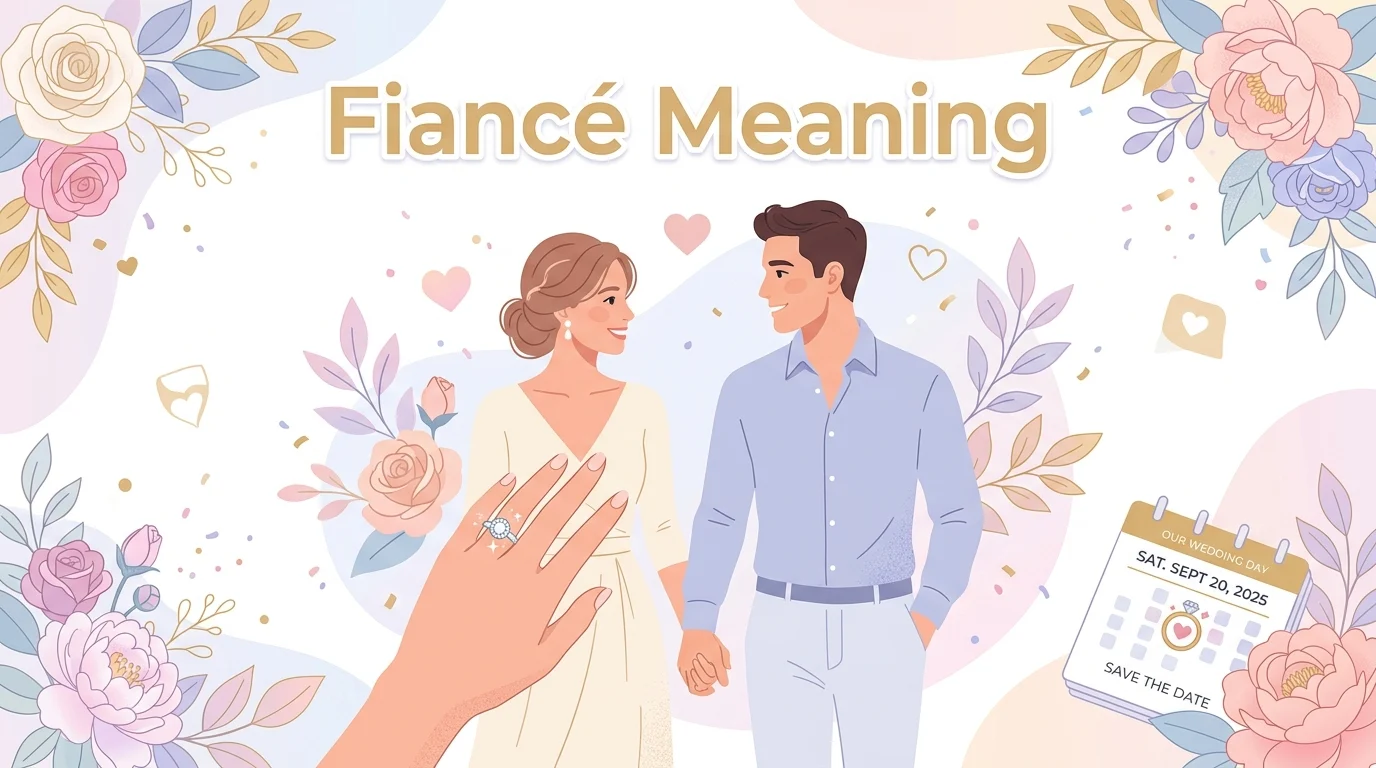
Quick Ans: A fiancé is a man who is engaged to be married. The feminine form, fiancée, refers to a woman who is engaged. Both words come from French and are commonly used in English when referring to an engaged partner before marriage.
If you’ve ever seen the word fiancé and wondered exactly what it means or how it differs from fiancée, you’re not alone. These two similar-looking words often confuse English speakers because they differ by just one letter but refer to different genders.
Whether you’re announcing an engagement, writing a wedding invitation, updating your social media relationship status, or simply expanding your vocabulary, understanding the correct meaning of fiancé is helpful.
In this guide, you’ll learn the definition of fiancé, how to pronounce it, when to use it, the difference between fiancé and fiancée, real-life examples, common mistakes, alternative terms, and answers to frequently asked questions.
Quick Answer Box
| Topic | Answer |
|---|---|
| Meaning | A man who is engaged to be married |
| Feminine Form | Fiancée |
| Word Origin | French |
| Pronunciation | fee-ahn-SAY |
| Used In | Everyday conversations, weddings, legal documents, social media |
| Relationship Status | Engaged but not yet married |
What Does Fiancé Mean?
A fiancé is an individual who has agreed to marry someone and is engaged but not yet married.
The engagement usually begins after one partner proposes marriage and the other accepts. From that moment until the wedding, the man may be referred to as a fiancé.
Example:
- My fiancé proposed during our vacation.
- I can’t wait to marry my fiancé next summer.
- My fiancé and I are planning our wedding together.
The word identifies someone’s relationship status before marriage.
Full Definition
According to standard English usage, a fiancé is an engaged individual.
The term comes from the French verb fiancer, meaning “to betroth” or “to promise in marriage.”
Although English has adopted both fiancé and fiancée, many people mistakenly use them interchangeably.
Understanding this distinction helps ensure accurate communication, especially in formal writing.
Context and Usage
The word fiancé appears in many personal and professional situations.
Everyday Conversations
People commonly introduce their future spouse by saying:
- This is my fiancé.
- My fiancé loves hiking.
- My fiancé and I recently bought a house.
Wedding Planning
During engagement, couples often refer to each other as fiancé or fiancée while arranging:
- Wedding venues
- Guest lists
- Invitations
- Photography
- Catering
- Honeymoons
Social Media
Engagement announcements frequently include the word fiancé.
Examples:
- I said yes to my amazing fiancé!
- Weekend getaway with my fiancé.
- Counting down the days until I marry my fiancé.
Official Documents
The term may appear on:
- Wedding paperwork
- Visa applications
- Insurance forms
- Immigration documents
- Legal declarations
Real-Life Examples
Conversation Example 1
Emma: Who’s coming with you?
Olivia: My fiancé.
Emma: I’d love to meet him.
Conversation Example 2
David: How long have you been engaged?
Ryan: My fiancé proposed six months ago.
Conversation Example 3
Sophia: Have you chosen a wedding date?
Lucas: Yes. My fiancé and I picked one in October.
Conversation Example 4
Sarah: Who helped you choose the venue?
Emily: My fiancé and I visited several places together.
Conversation Example 5
Jake: Is that your fiancé?
Alex: Yes, we’re getting married next spring.
Pronunciation
Both words are pronounced almost the same:
fee-ahn-SAY
The final syllable receives the emphasis.
Although English speakers occasionally pronounce them differently, the traditional pronunciation remains the same for both.
Alternative Terms
Depending on the conversation, people may also say:
- Future husband
- Future wife
- Engaged partner
- Partner
- Significant other
- Better half
- Soon-to-be spouse
- Husband-to-be
- Wife-to-be
While these alternatives are common, fiancé specifically indicates that the person is engaged.
Related Relationship Terms
Learning related vocabulary helps you better understand family and relationship discussions.
Common terms include:
- Engagement
- Proposal
- Bride
- Groom
- Spouse
- Husband
- Wife
- Marriage
- Wedding
- Anniversary
Each describes a different stage in a relationship.
How to Use Fiancé Correctly
When referring to an engaged individual:
Correct:
- My fiancé loves Italian food.
- My fiancé proposed in Paris.
- My fiancé and I are planning our wedding.
Incorrect:
- My husband proposed yesterday. (If you’re not married yet.)
- My boyfriend and I got engaged last week. (Not wrong, but fiancé is more specific.)
Using fiancé reflects the updated relationship status after an engagement.
Common Mistakes
Several errors appear frequently.
Confusing Fiancé and Fiancée
The most common mistake is mixing up the masculine and feminine forms.
Spelling Without the Accent
Many people write:
- fiance
- fiancee
These spellings are widely accepted in informal digital communication, but fiancé and fiancée are considered the standard forms.
Using the Wrong Relationship Term
Someone who is already married is no longer a fiancé.
Instead, they become:
- Husband
- Wife
- Spouse
When Not to Use Fiancé
Avoid using fiancé when:
- The couple is dating but not engaged.
- The couple is already married.
- The engagement has ended.
- You’re referring to a gender-neutral situation where “partner” may be preferred based on personal preference.
Choosing the correct relationship term prevents confusion.
Usage Tips
To use fiancé naturally:
- Use it only after an engagement.
- Include the accent marks in formal writing when possible.
- Consider your audience when selecting relationship terms.
Correct usage makes both formal and casual communication more precise.
Frequently Asked Questions
What does fiancé mean?
A fiancé is an individual who is engaged to be married.
What is the difference between fiancé and fiancée?
Fiancé refers to an engaged individual(male), while fiancée refers to an engaged individual(female).
Is fiancé a French word?
Yes. It comes from French and has been adopted into English.
How do you pronounce fiancé?
It is pronounced fee-ahn-SAY.
Can I write “fiance” without the accent?
Yes, especially online, although fiancé is the preferred spelling in formal writing.
Is fiancé used after marriage?
No. After marriage, the person becomes your husband or spouse.
Can both individuals use the word fiancé?
Traditionally, no. Men are fiancés, while women are fiancées. However, some modern publications may use broader language depending on style preferences.
Is fiancé a formal word?
Yes. It is appropriate in both formal and informal contexts.
When do you become someone’s fiancé?
Immediately after accepting a marriage proposal.
Is “engaged partner” the same as fiancé?
Generally yes, although fiancé specifically refers to an engaged individual.
Conclusion
The meaning of fiancé is simple yet important: it refers to a individual who is engaged to be married. Once a marriage proposal has been accepted, the engaged person is traditionally called a fiancé until the wedding takes place. His future spouse, if female, is called a fiancée.
Understanding the difference between fiancé and fiancée helps avoid common writing mistakes and ensures accurate communication in conversations, wedding planning, legal documents, and social media posts. Whether you’re celebrating your own engagement or simply improving your English vocabulary, knowing how and when to use these terms will help you communicate with confidence.
Discover More:-
- Occupation Meaning: Definition, Types, Examples & How It’s Used 2026
- Progressive Meaning: Definition, Uses, Examples & Explained 2026

Ella Parker is a professional content writer with a passion for creating clear, engaging, and well-researched articles. She focuses on delivering valuable insights and practical information across business, technology, and lifestyle topics.