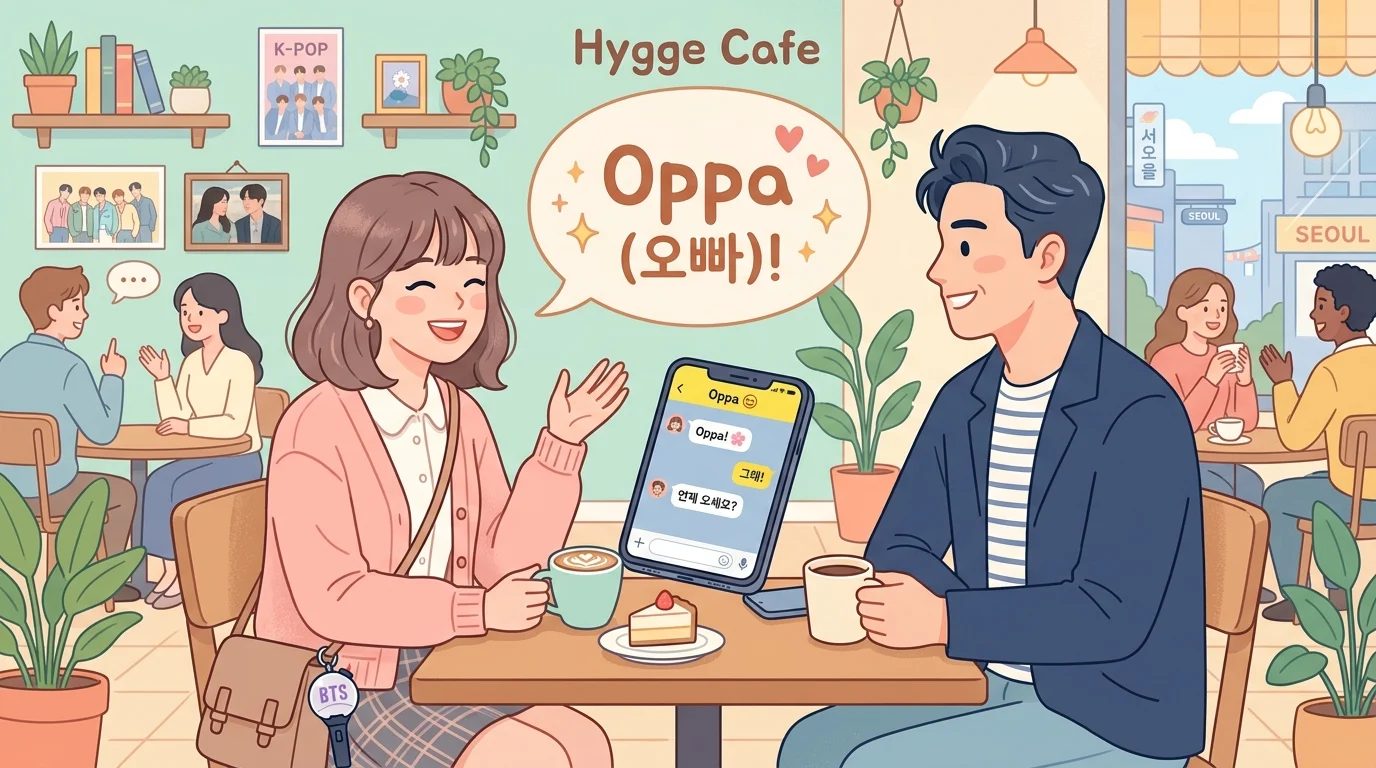
Quick Ans: Oppa (오빠) is a Korean word that literally means “older brother.” However, in everyday Korean conversations, it is commonly used by females to address or refer to an older male who is a brother, close friend, boyfriend, or husband. Thanks to the global popularity of K-dramas and K-pop, the word “Oppa” has become widely recognized around the world.
If you’ve watched a Korean drama, listened to K-pop, or chatted with Korean friends online, you’ve probably heard the word Oppa. It’s one of the most popular Korean words used in daily conversation and has become familiar to millions of people worldwide.
Although many international fans associate Oppa with romance, its meaning is actually much broader. Depending on the relationship and situation, it can express family bonds, friendship, affection, admiration, or respect.
This guide explains everything you need to know about the Oppa meaning, including its literal definition, cultural importance, texting usage, conversation examples, platform-specific usage, alternative Korean family terms, etiquette, and frequently asked questions.
Quick Answer Box
| Topic | Answer |
|---|---|
| Meaning | Older brother (used by females) |
| Language | Korean |
| Used By | Females addressing an older male |
| Common Contexts | Family, friendships, dating, marriage, K-pop, K-dramas |
| Tone | Respectful, affectionate, friendly |
| Example | “Oppa, let’s eat together.” |
What Does Oppa Mean?
The Korean word Oppa (오빠) literally translates to “older brother.”
However, its meaning extends beyond biological siblings.
A female may call an older male Oppa if he is:
- Her older brother
- Her boyfriend
- Her husband
- A close older male friend
- Someone she respects and feels close to
Because Korean culture places great importance on age and relationships, words like Oppa help show respect while expressing closeness.
Full Definition
Unlike English, Korean contains different words for addressing older people depending on both the speaker’s gender and the listener’s gender.
When a female speaks to an older male she knows well, Oppa is the appropriate term.
It combines:
- Respect
- Familiarity
- Affection
- Warmth
This makes Oppa much more meaningful than simply saying someone’s name.
Context and Usage
The meaning of Oppa depends on the relationship.
Family
Girls call their biological older brother:
“Oppa.”
Example:
“Oppa, can you help me with my homework?”
Dating
Many girlfriends call their older boyfriend Oppa.
Example:
“Oppa, what should we have for dinner?”
This is one of the most common uses seen in Korean dramas.
Marriage
Many wives continue calling their husbands Oppa after marriage if the husband is older.
Friendships
A woman may call an older male friend Oppa if they share a close relationship.
It does not automatically imply romance.
Real-Life Conversation Examples
Conversation Example 1
Sister: Oppa, are you home?
Brother: I’ll be there in ten minutes.
Conversation Example 2
Girlfriend: Oppa, did you eat?
Boyfriend: Not yet. Let’s eat together.
Conversation Example 3
Friend: Oppa, can you recommend a good restaurant?
Friend: Sure, I know a great place nearby.
Conversation Example 4
Fan: Oppa, your concert was amazing!
Singer: Thank you for your support!
Conversation Example 5
Wife: Oppa, don’t forget our dinner reservation tonight.
Husband: I won’t. I’m looking forward to it.
Platform-Specific Usage
Text Messages
Korean speakers frequently use Oppa in casual text conversations instead of the person’s name.
Example:
“Good morning, Oppa.”
KakaoTalk
On Korea’s most popular messaging app, KakaoTalk, Oppa appears naturally in chats between siblings, couples, and close friends.
Fans often comment:
- Love you, Oppa!
- Handsome Oppa!
- Fighting, Oppa!
These comments usually appear under celebrity photos.
TikTok
K-pop and K-drama fans frequently use Oppa in videos, comments, and hashtags.
X (Twitter)
International fans often tweet about their favorite Korean actors or idols using the word Oppa.
YouTube
Viewers commonly comment:
“Oppa, your performance was amazing!”
Although many international fans use the term affectionately, native Korean usage follows cultural and relationship guidelines.
Cultural Significance
Oppa represents more than just an older male.
It reflects Korean values such as:
- Respect for elders
- Family relationships
- Social hierarchy
- Emotional closeness
- Politeness
Understanding these cultural aspects helps explain why the word is so meaningful.
Similar Korean Family Terms
Several Korean words function similarly depending on age and gender.
Hyung (형)
Used by a younger male addressing an older male.
Noona (누나)
Used by a younger male addressing an older female.
Unnie (언니)
Used by a younger female addressing an older female.
Together with Oppa, these words form an important part of everyday Korean communication.
How to Respond When Someone Calls You Oppa
If someone calls you Oppa, your response depends on your relationship.
Friendly replies include:
- “Yes?”
- “What’s up?”
- “How can I help?”
- “Sure.”
- “Let’s go.”
In Korean conversations, the response is usually natural and conversational rather than focusing on the title itself.
Common Misinterpretations
Many international fans misunderstand Oppa.
Myth 1: Oppa Always Means Boyfriend
False.
It can also refer to an older brother, husband, or close male friend.
Myth 2: Anyone Can Say Oppa
Incorrect.
Traditionally, only females use Oppa when addressing an older male.
Myth 3: Oppa Is Always Romantic
Not true.
Many family members use Oppa with no romantic meaning whatsoever.
When Not to Use Oppa
Avoid using Oppa:
- For younger males.
- For strangers unless the cultural situation makes it appropriate.
- In formal business settings.
- If you’re unsure about Korean social etiquette.
- Simply because someone is a Korean celebrity.
Using someone’s proper name or title is often more appropriate outside close relationships.
Usage Tips
To use Oppa correctly:
- Understand Korean culture.
- Use it respectfully.
- Know the relationship.
- Don’t assume every older Korean man should be called Oppa.
- Remember that context determines whether it sounds natural.
Learning these cultural nuances shows respect for the Korean language.
Frequently Asked Questions
What does Oppa mean?
It literally means “older brother” and is used by females when addressing an older male.
Does Oppa always mean boyfriend?
No. It can also refer to an older brother, husband, or close male friend.
Can men say Oppa?
Traditionally, no. Younger males usually use the word Hyung instead.
Is Oppa romantic?
Sometimes. It depends entirely on the relationship.
Can foreigners use Oppa?
Yes, but it’s best to understand Korean culture before using it regularly.
Why do K-pop fans say Oppa?
Many fans affectionately refer to older male idols as Oppa, inspired by Korean culture.
Is Oppa respectful?
Yes. It expresses familiarity while maintaining respect.
Is Oppa used in Korean dramas?
Absolutely. It’s one of the most common words heard in K-dramas.
What’s the difference between Oppa and Hyung?
Oppa is used by females addressing older males, while Hyung is used by younger males addressing older males.
Why is Oppa so popular worldwide?
The global success of K-pop, K-dramas, and Korean entertainment has introduced millions of international fans to everyday Korean words like Oppa.
Conclusion
The Oppa meaning goes far beyond the simple translation of “older brother.” In Korean culture, it represents respect, affection, familiarity, and strong personal relationships. Depending on the context, a female may use Oppa to address her older brother, boyfriend, husband, or a close older male friend.
As Korean entertainment continues to grow in popularity around the world, words like Oppa have become part of everyday vocabulary for many international fans. However, understanding its cultural background and proper usage is just as important as knowing its definition. Whether you encounter Oppa in a text message, a K-drama, a K-pop fan community, or a real-life conversation, you’ll now understand its meaning and the warmth it conveys.
Discover More:-
- Occupation Meaning: Definition, Types, Examples & How It’s Used 2026
- Progressive Meaning: Definition, Uses, Examples & Explained 2026

Alexander Cole is a professional content writer and researcher who specializes in creating informative, reader-friendly, and well-researched articles. He is committed to publishing accurate, valuable, and engaging content that helps readers stay informed and make smarter decisions.