Quick Ans: Commerce refers to the exchange of goods and services between individuals, businesses, or countries. It includes buying, selling, transportation, marketing, banking, insurance, communication, and other activities that help products move from producers to consumers.
Commerce is one of the most important foundations of every economy. Whether you’re purchasing groceries from a local store, ordering clothes online, or exporting products to another country, you’re participating in commerce.
Although many people use the terms commerce, business, and trade interchangeably, they are not exactly the same. Commerce is a broad concept that includes trade along with all the supporting services that make buying and selling possible.
From traditional marketplaces to modern e-commerce platforms, commerce has evolved dramatically over the years. Today, digital technology allows businesses to reach customers across the globe, making commerce faster, more efficient, and more accessible than ever before.
In this guide, you’ll learn the complete commerce meaning, its importance, types, characteristics, examples, and how it differs from trade and business.
Quick Answer Box
| Topic | Answer |
|---|---|
| Meaning | Exchange of goods and services |
| Category | Business and Economics |
| Includes | Trade, transportation, banking, insurance, marketing, warehousing |
| Purpose | Connect producers with consumers |
| Examples | Retail stores, online shopping, wholesale markets, exports and imports |
What Does Commerce Mean?
Commerce is the process of buying and selling goods and services along with all the activities that support these transactions.
In simple words, commerce ensures that products reach customers efficiently.
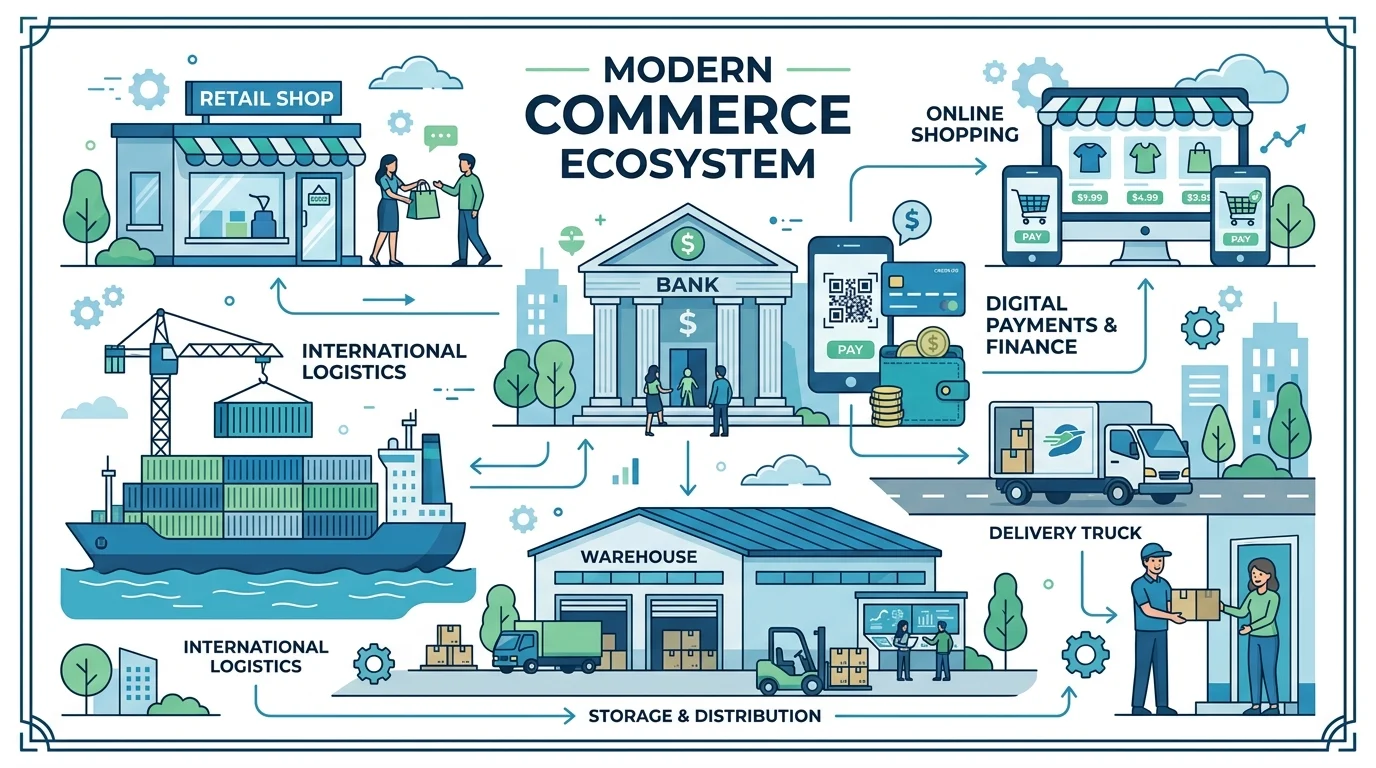
It involves much more than simply making a sale. Commerce includes transportation, communication, advertising, banking, insurance, warehousing, logistics, and customer service.
Without commerce, manufacturers would struggle to deliver products to consumers, and economic growth would slow significantly.
Full Definition
Commerce is a branch of business that focuses on the distribution of goods and services from producers to consumers.
It consists of two major components:
- Trade – Buying and selling goods and services.
- Aids to Trade – Services that support trade, such as transportation, banking, insurance, communication, warehousing, and advertising.
Together, these activities ensure that products move efficiently through the supply chain until they reach the final customer.
Context and Usage
The word commerce is commonly used in education, business, economics, and government.
Business Context
Example:
“Commerce helps businesses reach customers worldwide.”
Education
Example:
“She is studying Commerce in college.”
Government
Example:
“The government introduced new commerce policies.”
Online Shopping
Example:
“E-commerce has transformed modern commerce.”
International Business
Example:
“International commerce strengthens global trade.”
Real-Life Examples
Example 1 – Local Grocery Store
A grocery store purchases products from wholesalers and sells them to customers. Transportation, warehousing, banking, and payment systems all support this commercial activity.
Example 2 – Amazon Order
When you order a product online, commerce includes:
- Manufacturing
- Packaging
- Online payment
- Shipping
- Delivery
- Customer support
Example 3 – International Trade
A company in the United States exports machinery to Canada.
Banks process payments, shipping companies transport goods, and insurance protects the shipment.
All of these activities are part of commerce.
Example 4 – Clothing Brand
A fashion company designs clothing, advertises online, stores products in warehouses, and delivers orders to customers.
Each step contributes to commerce.
Example 5 – Restaurant Business
Restaurants purchase ingredients from suppliers, prepare meals, accept digital payments, and provide delivery services.
Commerce connects suppliers, businesses, and customers throughout the process.
Types of Commerce
Internal Commerce
Internal commerce takes place within the borders of a country.
It includes:
- Wholesale trade
- Retail trade
- Domestic transportation
- Local banking
Example:
A retailer purchasing products from a wholesaler within the same country.
External Commerce
External commerce involves international trade between countries.
It includes:
- Imports
- Exports
- International shipping
- Customs procedures
- Foreign exchange transactions
Example:
An American company exporting software services to Europe.
Components of Commerce
Commerce depends on several essential activities.
Trade
The buying and selling of products and services.
Transportation
Moving goods from manufacturers to consumers.
Warehousing
Storing products safely until they are needed.
Banking
Providing payment systems, loans, and financial services.
Insurance
Protecting businesses from financial losses.
Advertising
Promoting products to potential customers.
Communication
Connecting buyers, sellers, suppliers, and customers.
Commerce vs Trade
Although closely related, commerce and trade are different concepts.
| Commerce | Trade |
|---|---|
| Broader concept | Part of commerce |
| Includes support services | Focuses mainly on buying and selling |
| Covers logistics, banking, insurance | Primarily exchange of goods and services |
| Connects producers and consumers | Conducts transactions |
In simple terms, trade is one part of commerce.
Commerce vs Business
Business is an even broader concept.
A business includes:
- Manufacturing
- Commerce
- Service industries
- Marketing
- Management
Commerce specifically focuses on distributing goods and services.
Importance of Commerce
Commerce plays a vital role in economic development.
Some major benefits include:
- Creates employment opportunities
- Supports economic growth
- Encourages entrepreneurship
- Improves international relationships
- Expands consumer choices
- Promotes innovation
- Increases national income
- Supports small businesses
- Enables global trade
- Improves living standards
Without commerce, products would remain with manufacturers instead of reaching consumers.
E-Commerce vs Commerce
Many people confuse commerce with e-commerce.
Commerce
Includes all buying and selling activities, whether conducted online or offline.
Examples:
- Physical retail stores
- Wholesale markets
- International trade
- Local shops
E-Commerce
E-commerce refers specifically to buying and selling products over the internet.
Examples include:
- Amazon
- eBay
- Shopify stores
- Online grocery delivery
- Digital marketplaces
E-commerce is a subset of commerce.
Common Misunderstandings
Some people believe commerce only refers to shopping.
In reality, commerce includes many supporting services such as:
- Banking
- Insurance
- Logistics
- Warehousing
- Transportation
- Marketing
Another misconception is that commerce only happens online.
Traditional markets, supermarkets, and local businesses are also examples of commerce.
Why Commerce Is Important Today
Modern commerce has become increasingly digital.
Businesses now rely on:
- Online payments
- Mobile apps
- Cloud computing
- Digital marketing
- Global shipping
- Electronic invoicing
- Artificial intelligence
- Customer relationship management systems
These technologies make commerce faster, safer, and more convenient.
Usage Tips
To understand commerce correctly:
- Remember that commerce is broader than trade.
- Include supporting business activities when defining commerce.
- Distinguish commerce from manufacturing.
- Recognize the role of technology in modern commerce.
- Understand that commerce occurs both online and offline.
Frequently Asked Questions
What is the meaning of commerce?
Commerce is the exchange of goods and services along with all activities that support buying and selling.
Is commerce the same as trade?
No. Trade is a component of commerce.
What are the two main branches of commerce?
Trade and aids to trade.
What are aids to trade?
Services such as transportation, banking, insurance, warehousing, advertising, and communication.
What is internal commerce?
Commerce conducted within a country’s borders.
What is external commerce?
Commerce involving international trade between countries.
What is e-commerce?
E-commerce is the online buying and selling of goods and services.
Why is commerce important?
It supports economic growth, employment, business expansion, and consumer access to products.
Is commerce only for businesses?
No. Individuals also participate in commerce whenever they buy or sell products and services.
Can commerce exist without trade?
No. Trade is a fundamental part of commerce.
Conclusion
Commerce is the backbone of every modern economy. It encompasses the buying and selling of goods and services while also including the essential activities that make these transactions possible, such as transportation, banking, insurance, warehousing, advertising, and communication.
Whether you’re shopping in a local store, purchasing products online, or conducting international business, commerce plays a crucial role in connecting producers with consumers. Understanding the meaning of commerce helps individuals, students, entrepreneurs, and businesses appreciate how products and services move through the marketplace and contribute to economic growth.
Discover More:-
- Occupation Meaning: Definition, Types, Examples & How It’s Used 2026
- Progressive Meaning: Definition, Uses, Examples & Explained 2026

Ella Parker is a professional content writer with a passion for creating clear, engaging, and well-researched articles. She focuses on delivering valuable insights and practical information across business, technology, and lifestyle topics.